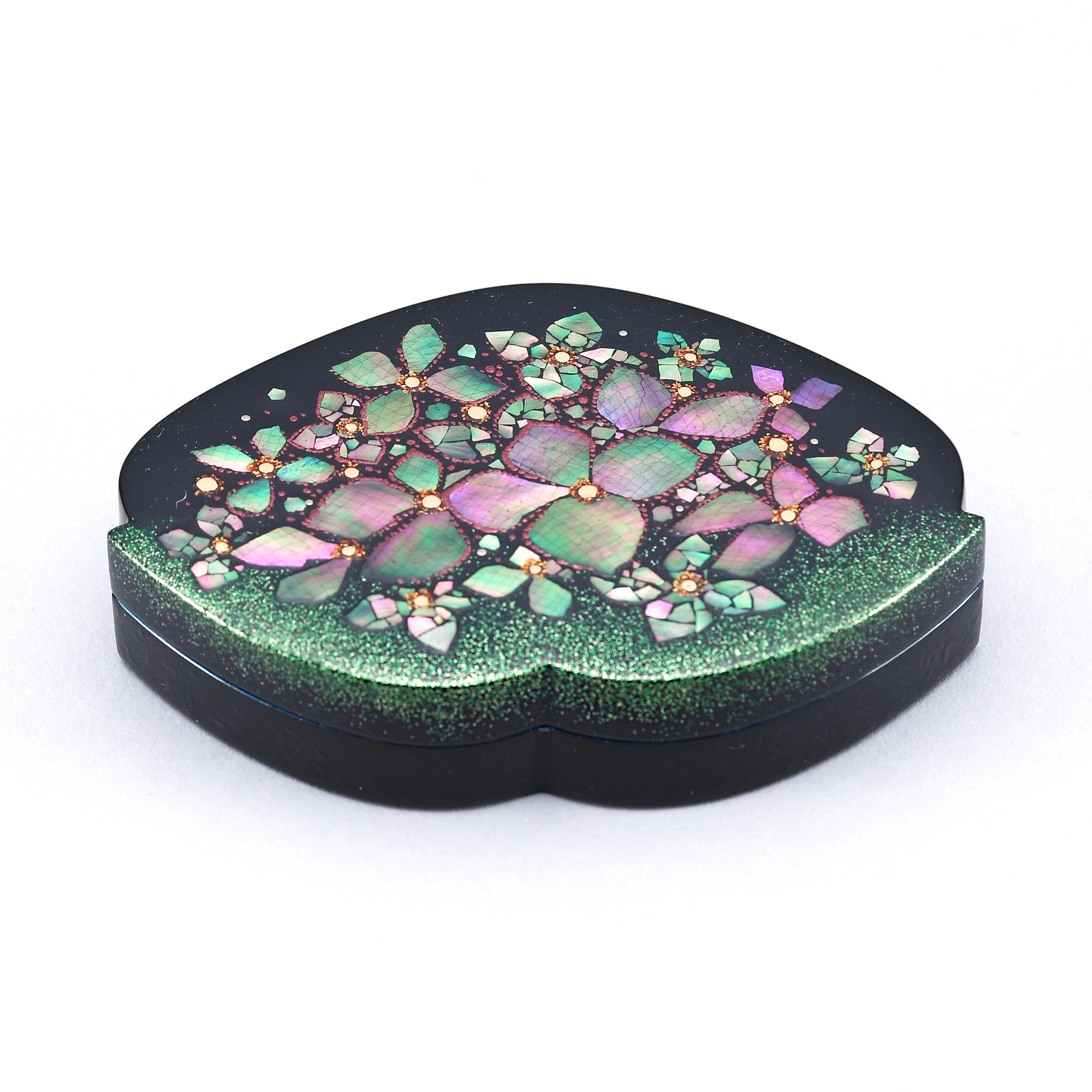
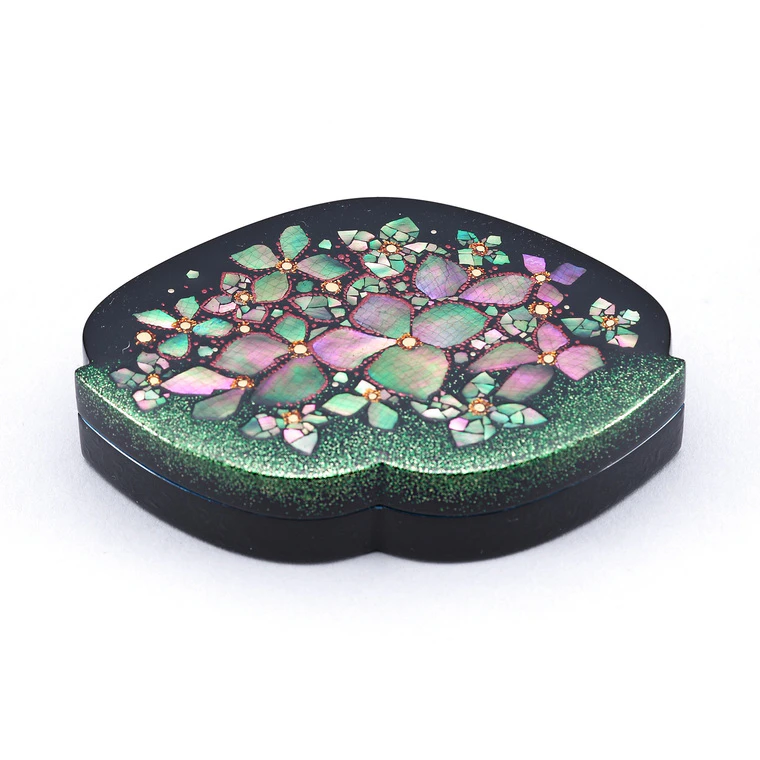
Hydrangea Maki-e Box “Rain Followed by Clear Skies”
H 1.7 x W 8.3 x D 5.5 cm,Year.2025Keiji Onihira
1973 -- Lacquerware
- Public Collections : Agency for Cultural Affairs etc.
- Price Range Please Inquire
About the Artwork
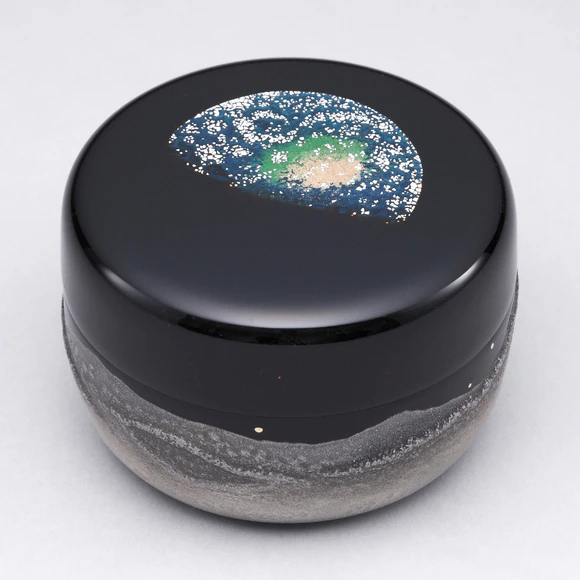
The front of this piece's box features hydrangeas, which bloom during the rainy season, depicted using the mother-of-pearl technique, and when the lid is opened, a rainbow and blue sky are depicted after the rain has stopped.
The title, "Uga ten sei" (Rain followed by clear skies) is a four-character idiom that describes a gradual improvement from a bad or difficult situation, just as the rain passes and the sky becomes clear and blue.
This piece, inspired by the image of the rain stopping and the sky clearing up, is imbued with hope that once difficult times are over, things will surely move in a positive direction.
Description
-
CategoryLacquerware
-
Materials
-
DimensionsH 1.7 x W 8.3 x D 5.5 cm
-
Year presented2025
-
RarityUnique
-
Paulownia BoxIncluded
-
Artist SignatureSigned (name of artwork, paulownia box)
Techniques Used
Dry lacquer
For works of dry lacquer (kanshitsu), first a clay form is created and plaster is used to take a mold of the form. Next, repeated layers of hemp cloth and lacquer are applied to the mold until they are built up to the desired thickness. Finally, the mold is removed and additional coats of lacquer are applied to finish the piece. The hemp fibers are strengthened when the lacquer bonds with them, making dry lacquer an excellent technique for creating sturdy forms with a significant degree of freedom.
Urushi-e
Urushi-e (“lacquer pictures”) is a decorative technique that consists of motifs painted in colored lacquer. Urushi-e is the oldest and most fundamental decorative lacquer technique.
Maki-e
Maki-e (literally “sprinkled pictures”) is a representative lacquerware technique that originated in Japan around 1,200 years ago. Maki-e is done by painting lacquer motifs on the surface of a piece using a fine brush and then sprinkling gold powder onto the lacquer before it hardens, producing luxurious decorations.
Mother-of-pearl inlay (Raden)
Mother-of-pearl inlay (Raden) is a decorative technique that uses the iridescent inner layer of abalone shell, turban shell, pearl oyster shell, or other mollusk shells. The technique came to Japan from China 1,300 years ago, and pieces featuring mother-of-pearl inlay are included among the artifacts at the Shōsōin Repository in Nara.
Selected exhibitions
- The 65th Ishikawa Traditional Kōgei Exhibition (2025)
- Selected