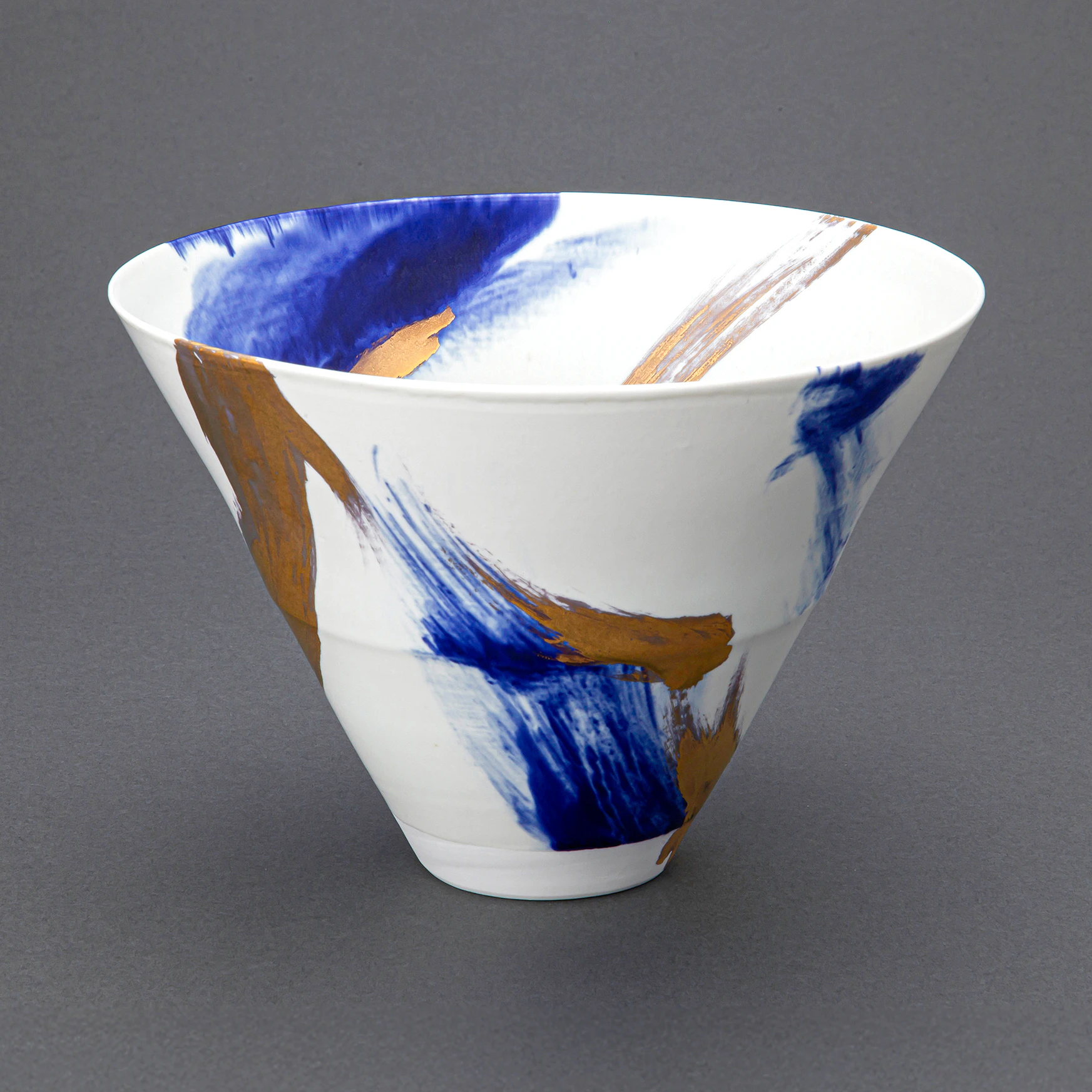
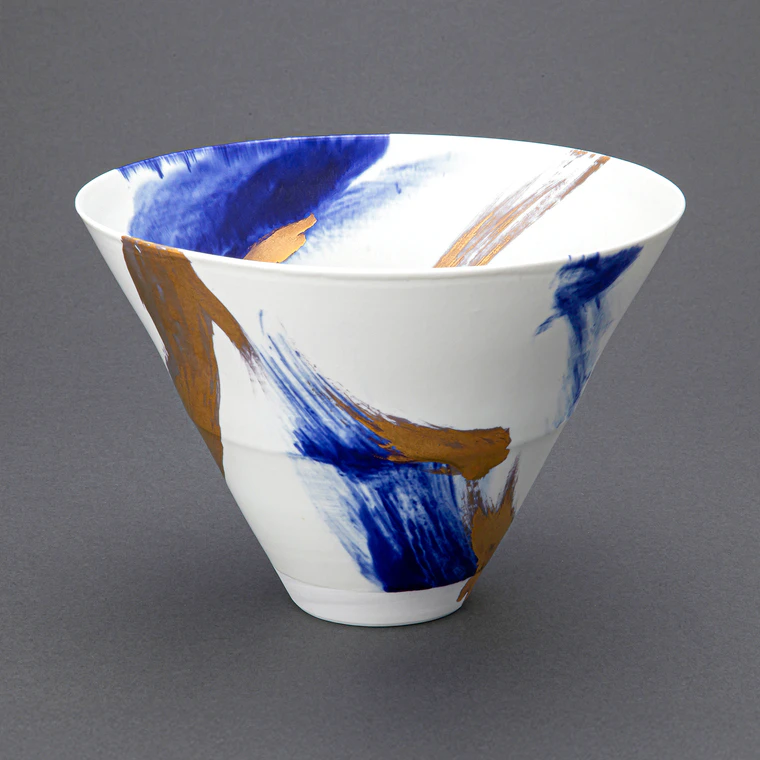
White Porcelain Vessel with Underglaze Blue and Gold Decoration
H 17.0 / ø 24.3 cm,Year.2026Yoko Imada
1971 -- Ceramics
- Price Range Please Inquire
Description
-
CategoryCeramics
-
DimensionsH 17.0 / ø 24.3 cm
-
Year presented2026
-
RarityUnique
Techniques Used
Blue underglaze
Blue and white porcelain (sometsuke) is made by painting blue underglaze decorations on white bisque-fired pottery using a cobalt-rich pigment known as zaffer (gosu). The piece is then coated with a transparent glaze and fired. This technique for making blue and white porcelain has been used in China since around the twelfth century during the Yuan Dynasty.
Gold decoration
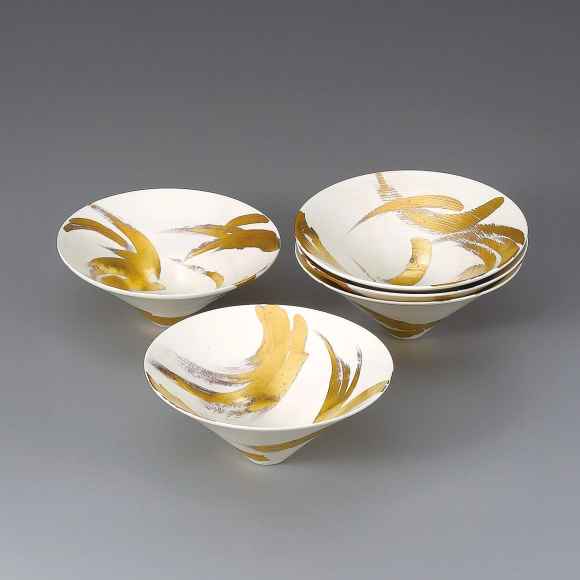
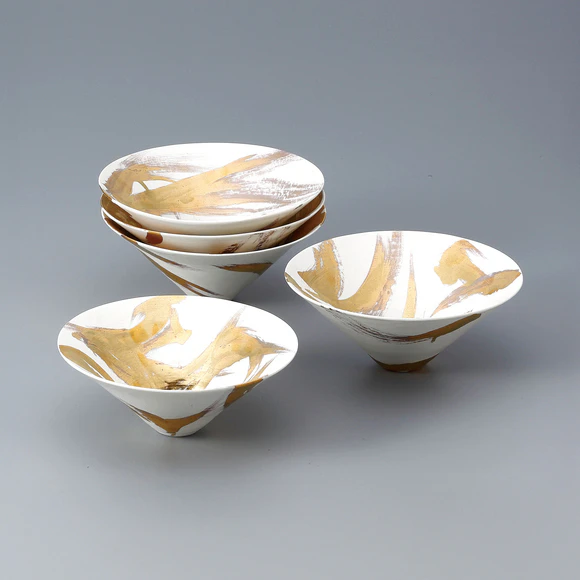
Gold decoration is a technique where decorations using gold pigment and gold leaf are applied onto a plain unglazed base or glazed surface of a vessel and are fired onto the vessel in a kiln. The gold decorations are fired at a temperature lower than the firing of the underglaze decorations, and the surface is polished to create a glossy finish.
White porcelain
White porcelain is made from a pale clay of pulverized pottery stone coated in a transparent glaze. Porcelain from China’s Song dynasty is especially famous. Japanese production began in the early seventeenth century in Arita on the island of Kyushu. White porcelain is frequently used as a base for overglaze enamels (iro-e) and blue-and-white (sometsuke) ware.
Selected exhibitions
- The 54th Ceramics Traditional Kōgei Exhibition (2026)
- Selected