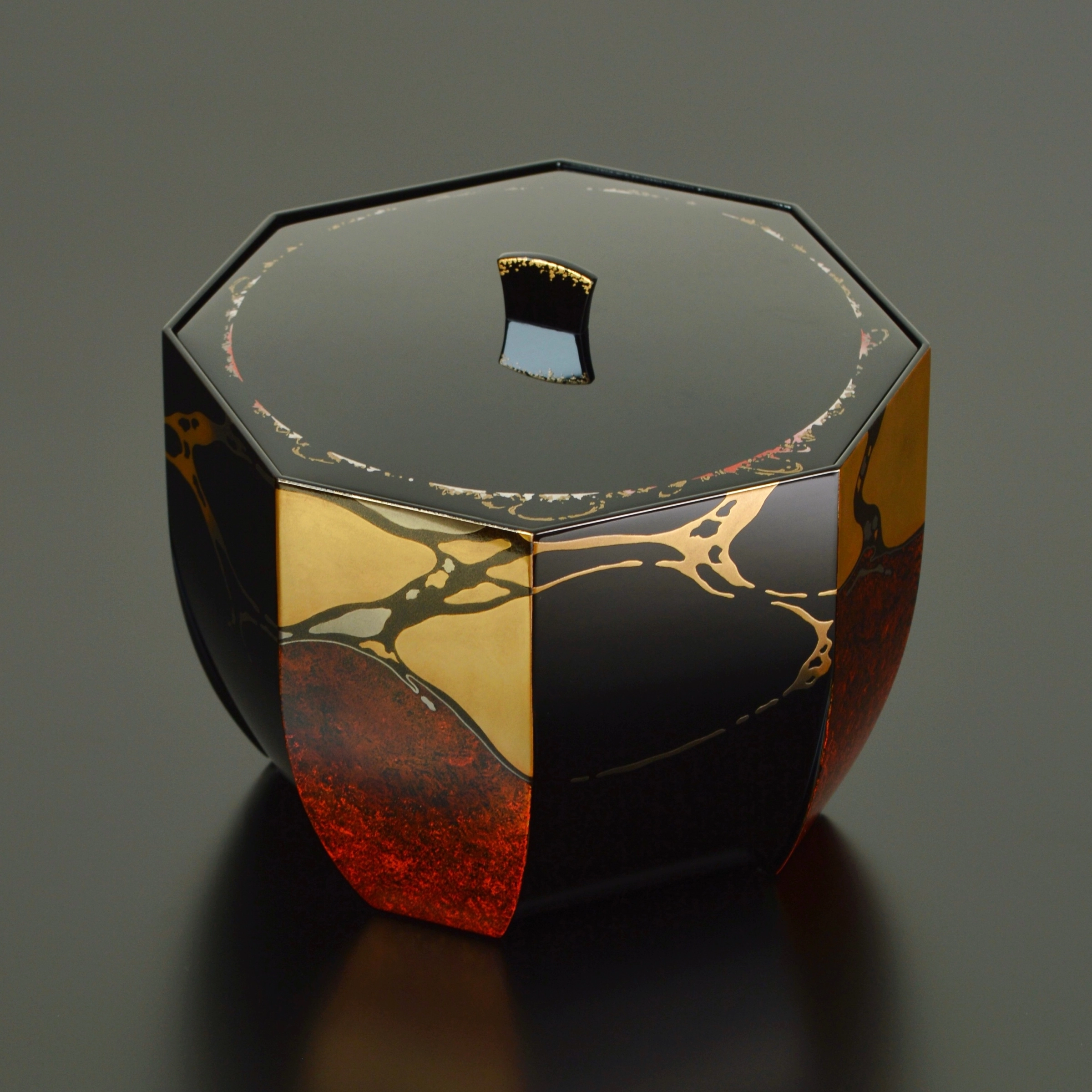
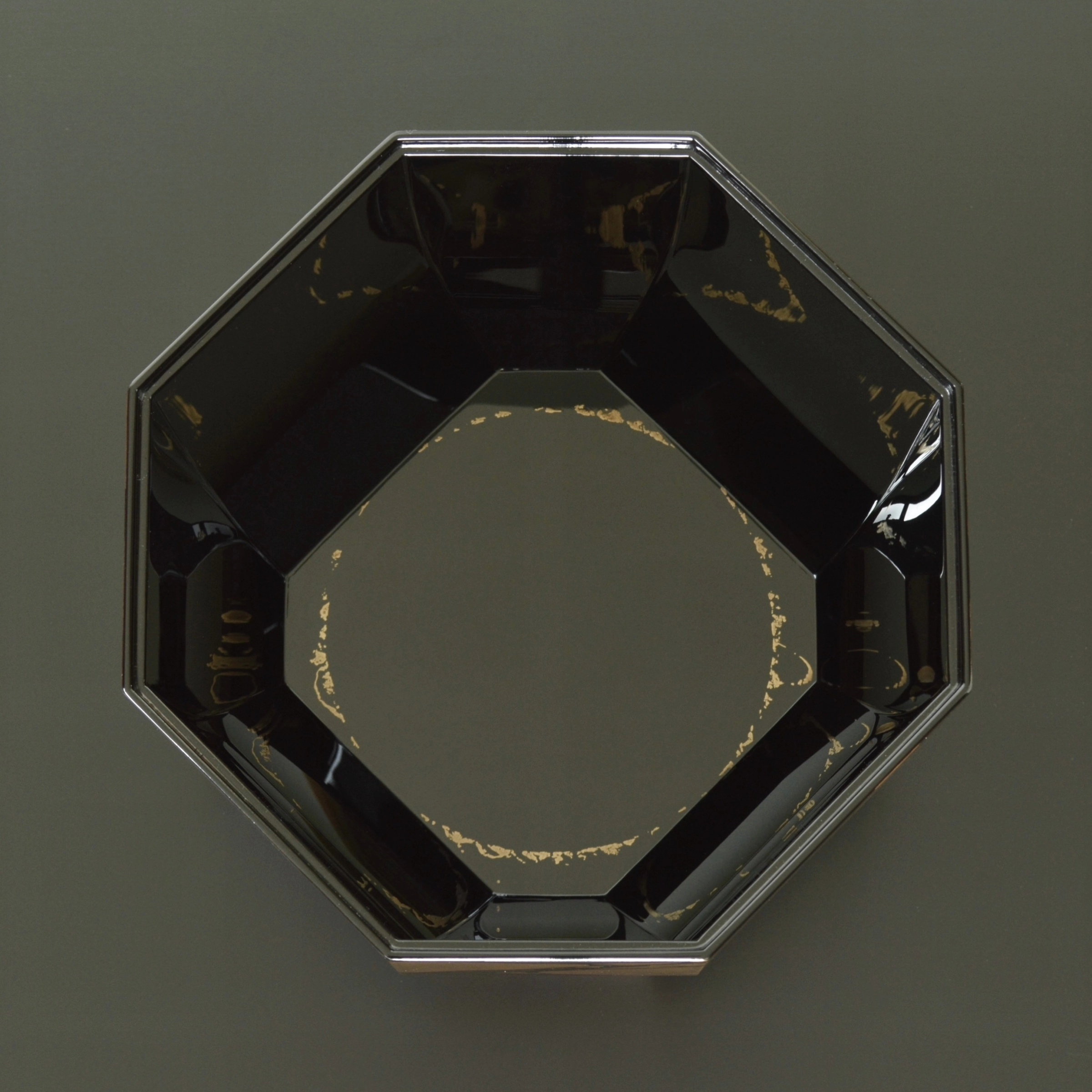
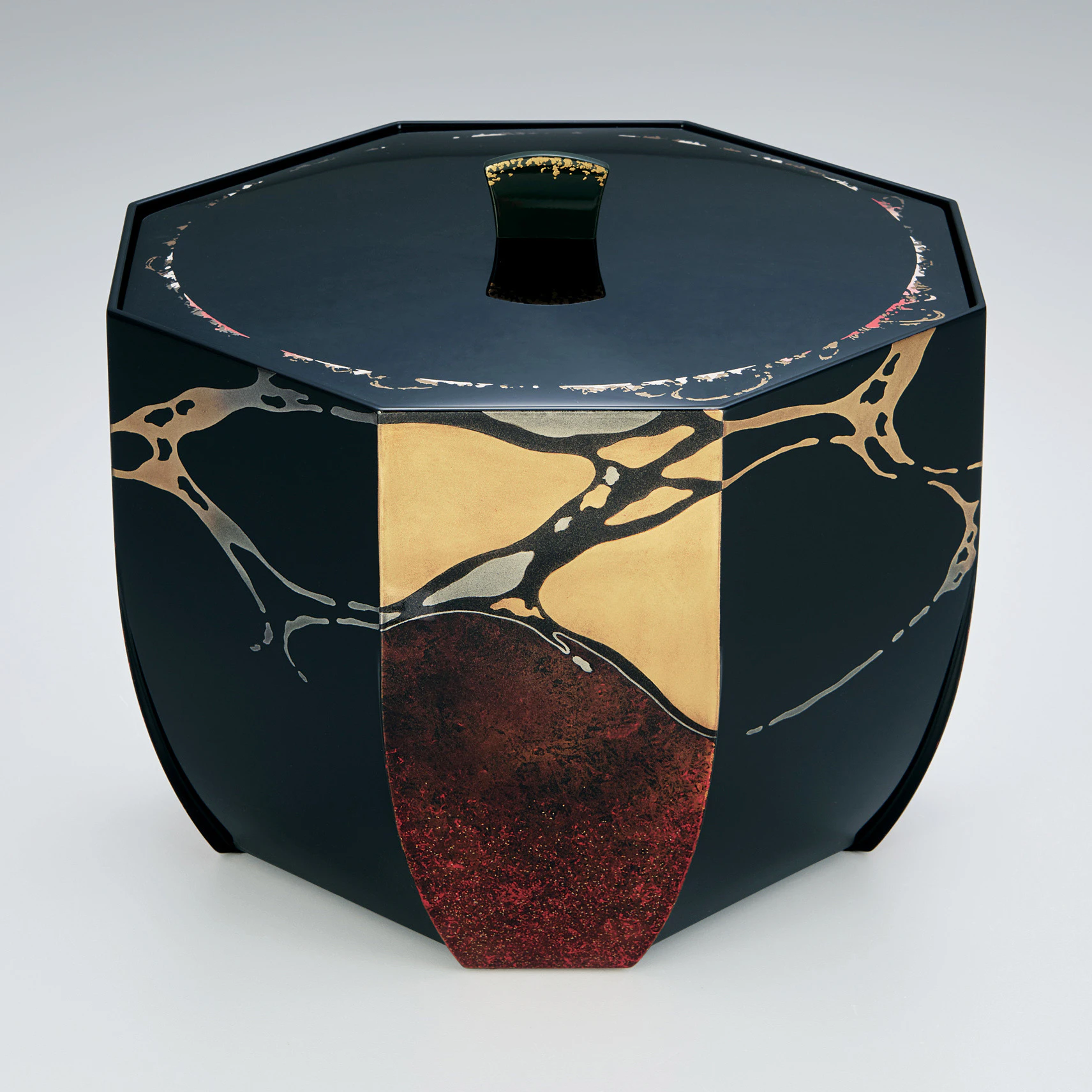
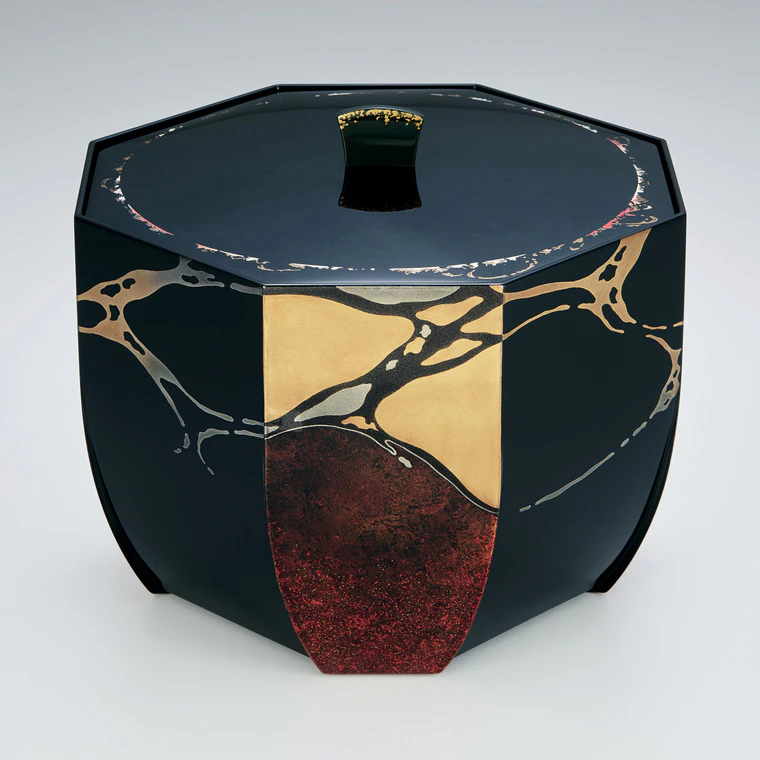
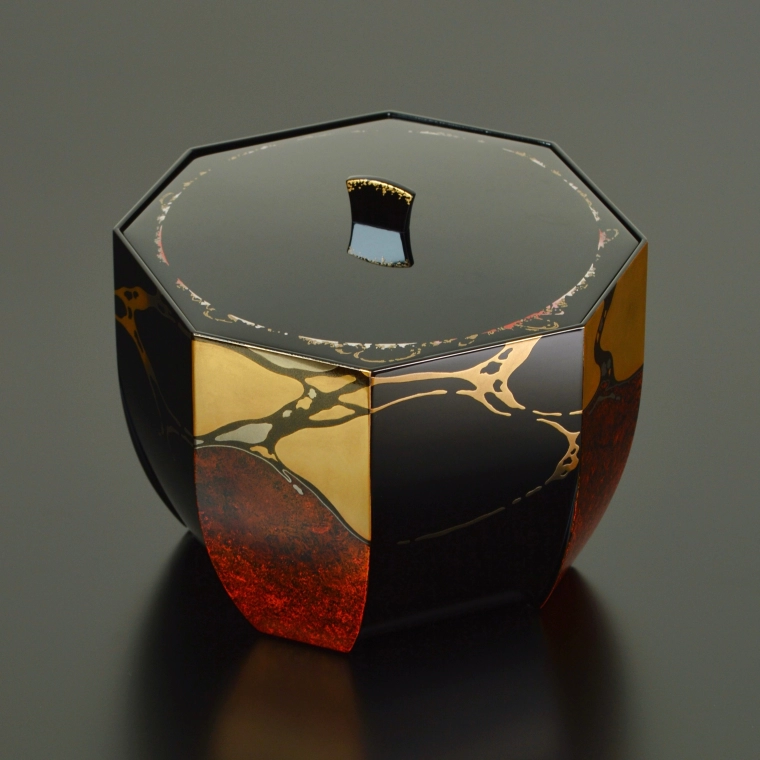
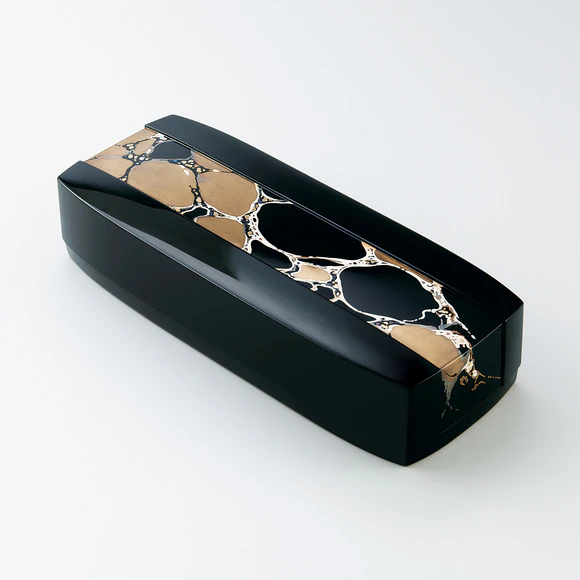
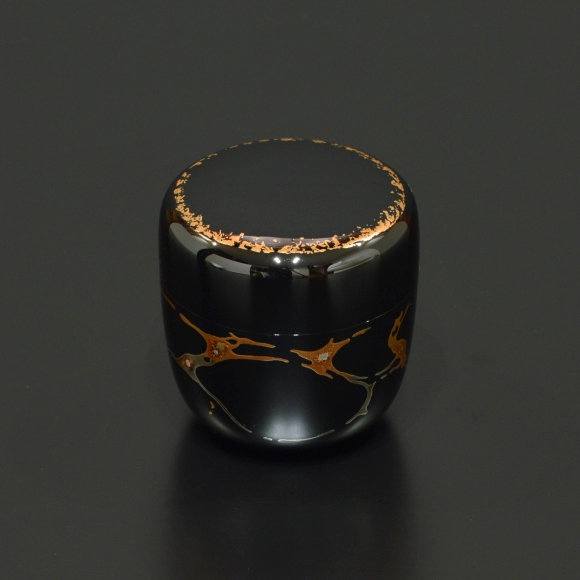
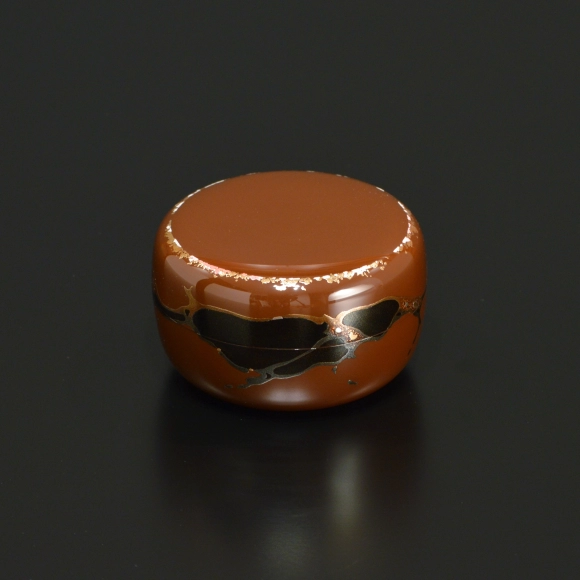
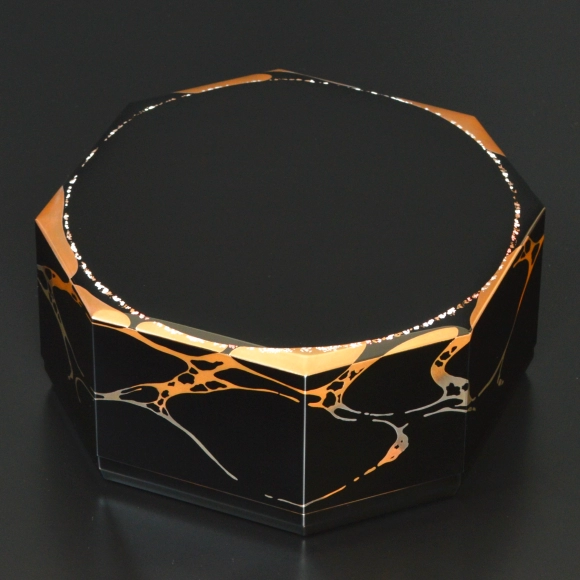
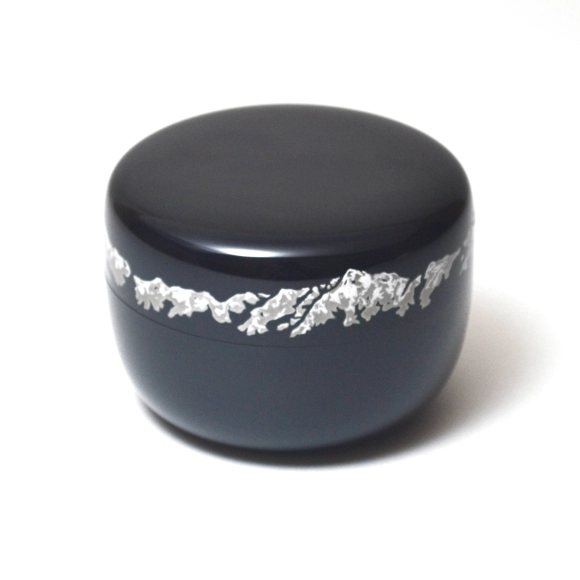
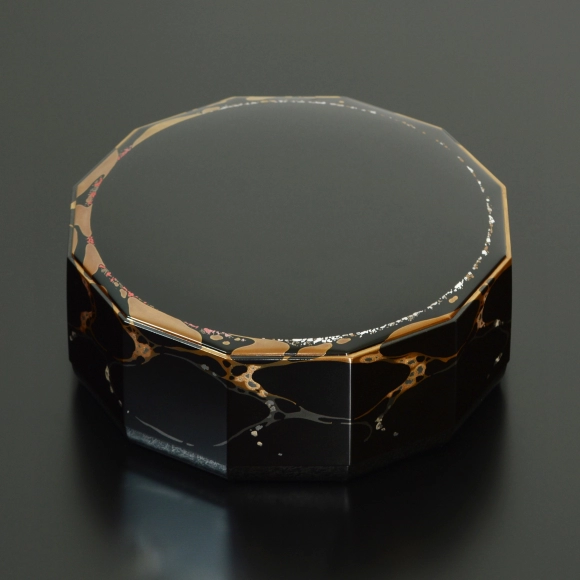
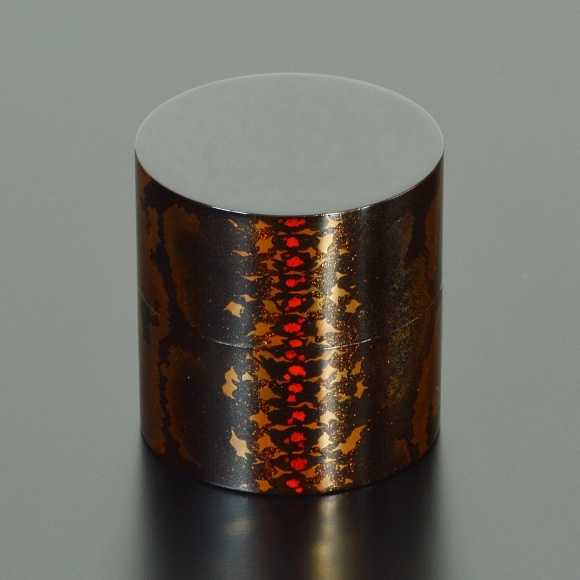
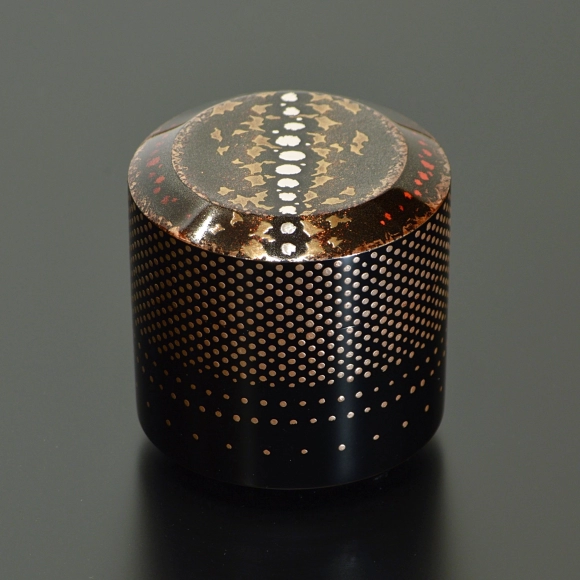
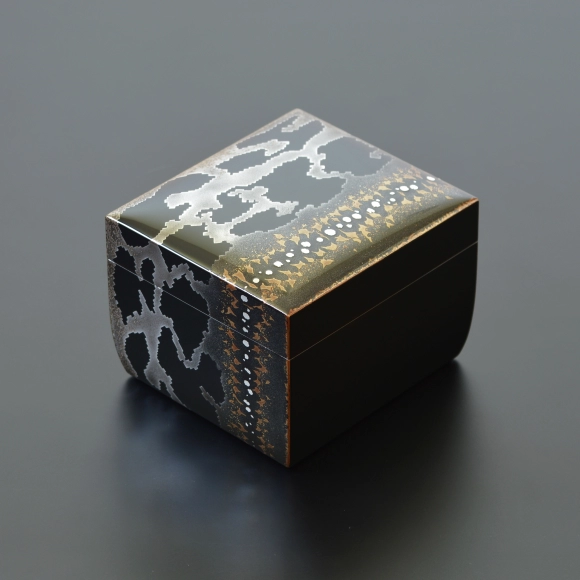
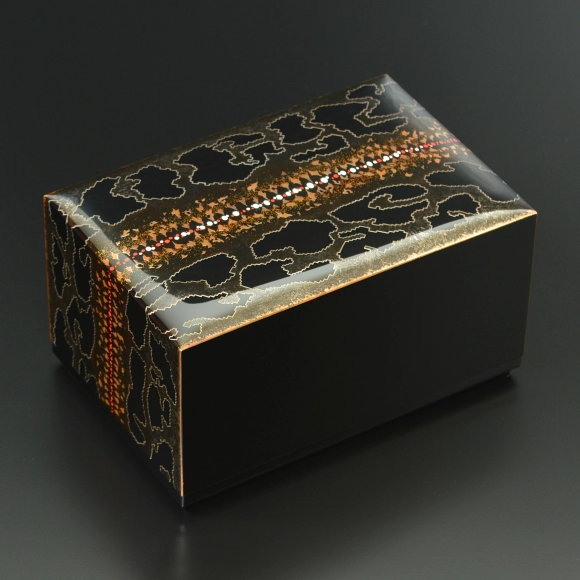
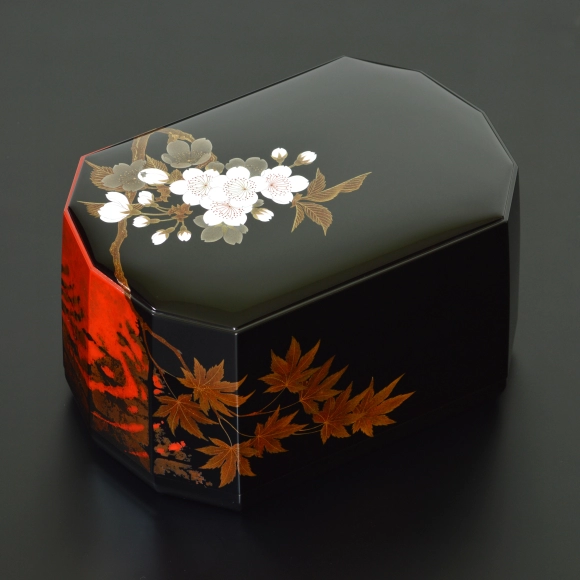
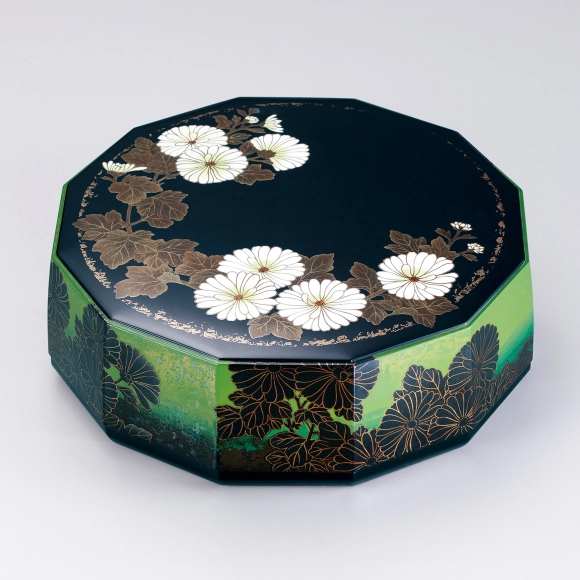
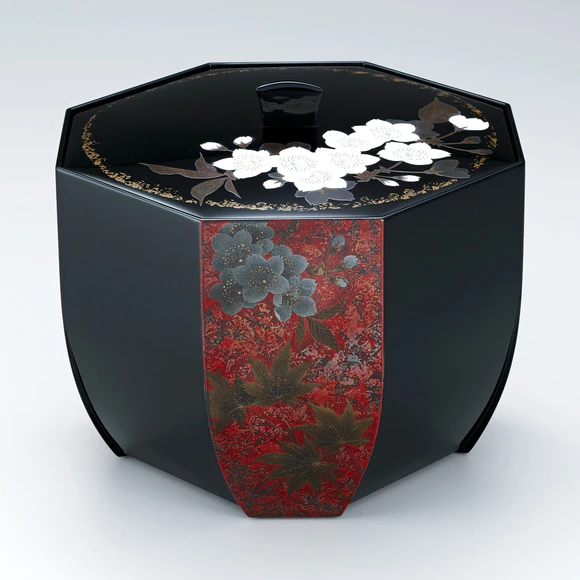
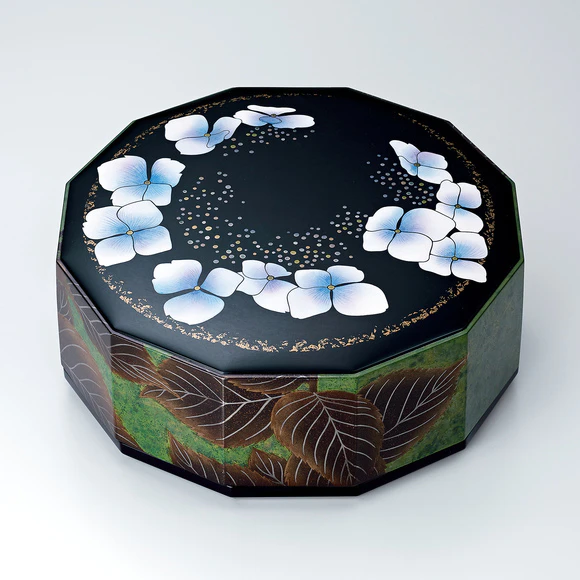
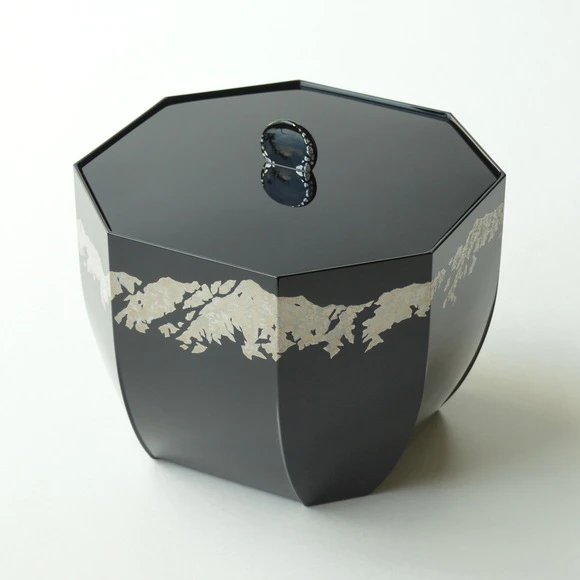
Covered Box with Design in Jōhana Makie “Prominence”
H 17.5 x W 20.3 x D 20.3 cm,Year.2025Jigoemon Ohara XVI
1979 -- Lacquerware
- Awarded 5 times at the Japan Kōgei Assoc. Exhibition
- Price Range Please Inquire
Description
-
CategoryLacquerware
-
Materials
-
DimensionsH 17.5 x W 20.3 x D 20.3 cm
-
Year presented2025
-
RarityUnique
-
Paulownia BoxIncluded
-
Artist SignatureSigned (name of artwork, paulownia box)
Techniques Used
Maki-e
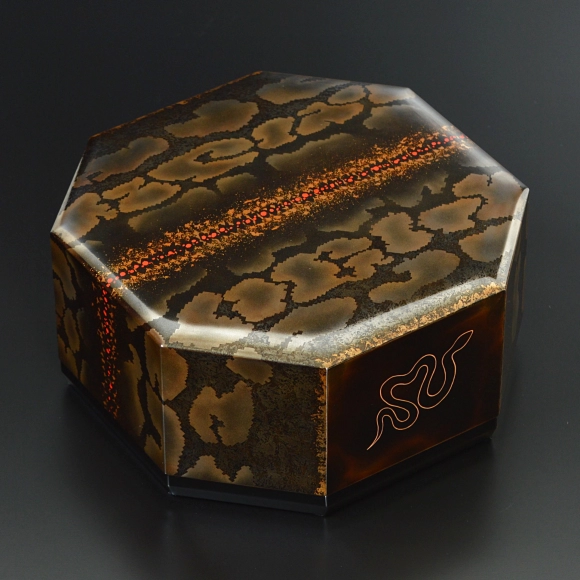
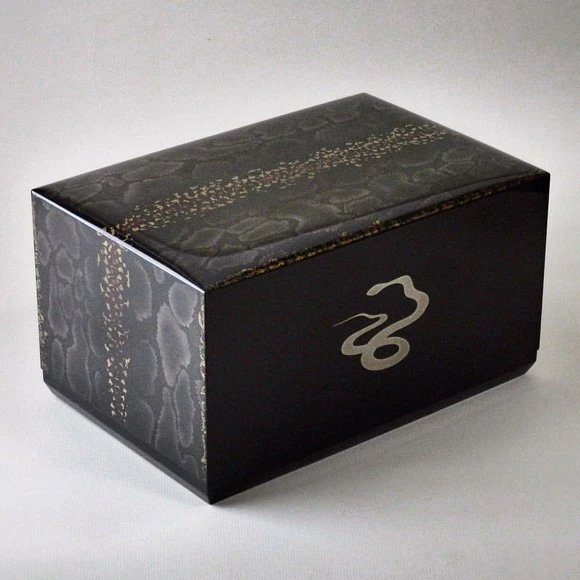
Maki-e (literally “sprinkled pictures”) is a representative lacquerware technique that originated in Japan around 1,200 years ago. Maki-e is done by painting lacquer motifs on the surface of a piece using a fine brush and then sprinkling gold powder onto the lacquer before it hardens, producing luxurious decorations.
Lacquering
Lacquering (kyūshitsu) is the art of applying lacquer to a substrate using spatulas or brushes. The technique includes a range of processes, from reinforcing the substrate with cloth to building up the foundation and applying the middle- and top-coats. The final coat can be left as is (nuritate), polished with charcoal to a high-gloss finish (roiro shiage), or given one of several hundred alternative (kawarinuri) finishes. Lacquer application is known for both its technical difficulty and richly expressive qualities.
Selected exhibitions
- The 72nd Japan Traditional Kōgei Exhibition (2025)
- Selected