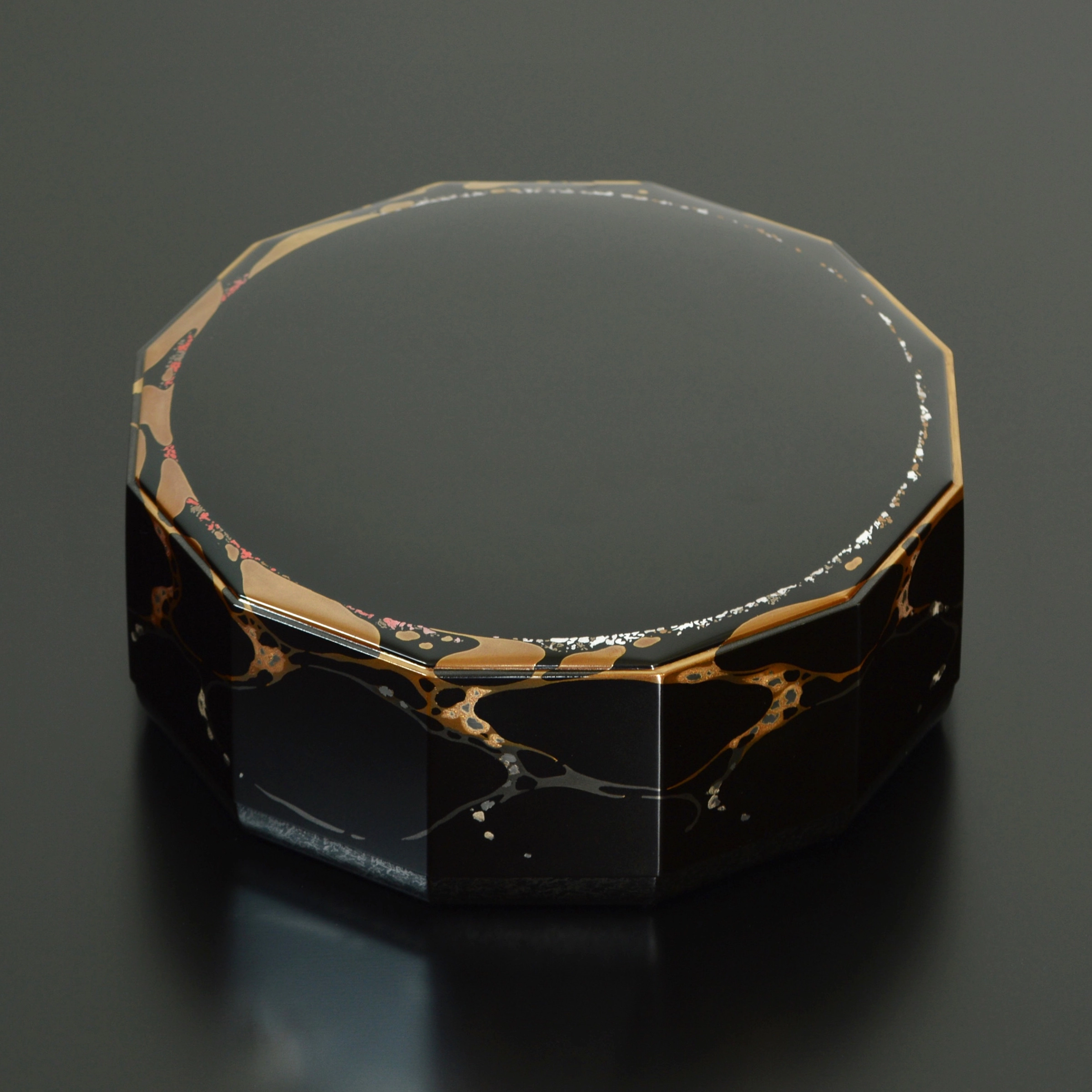
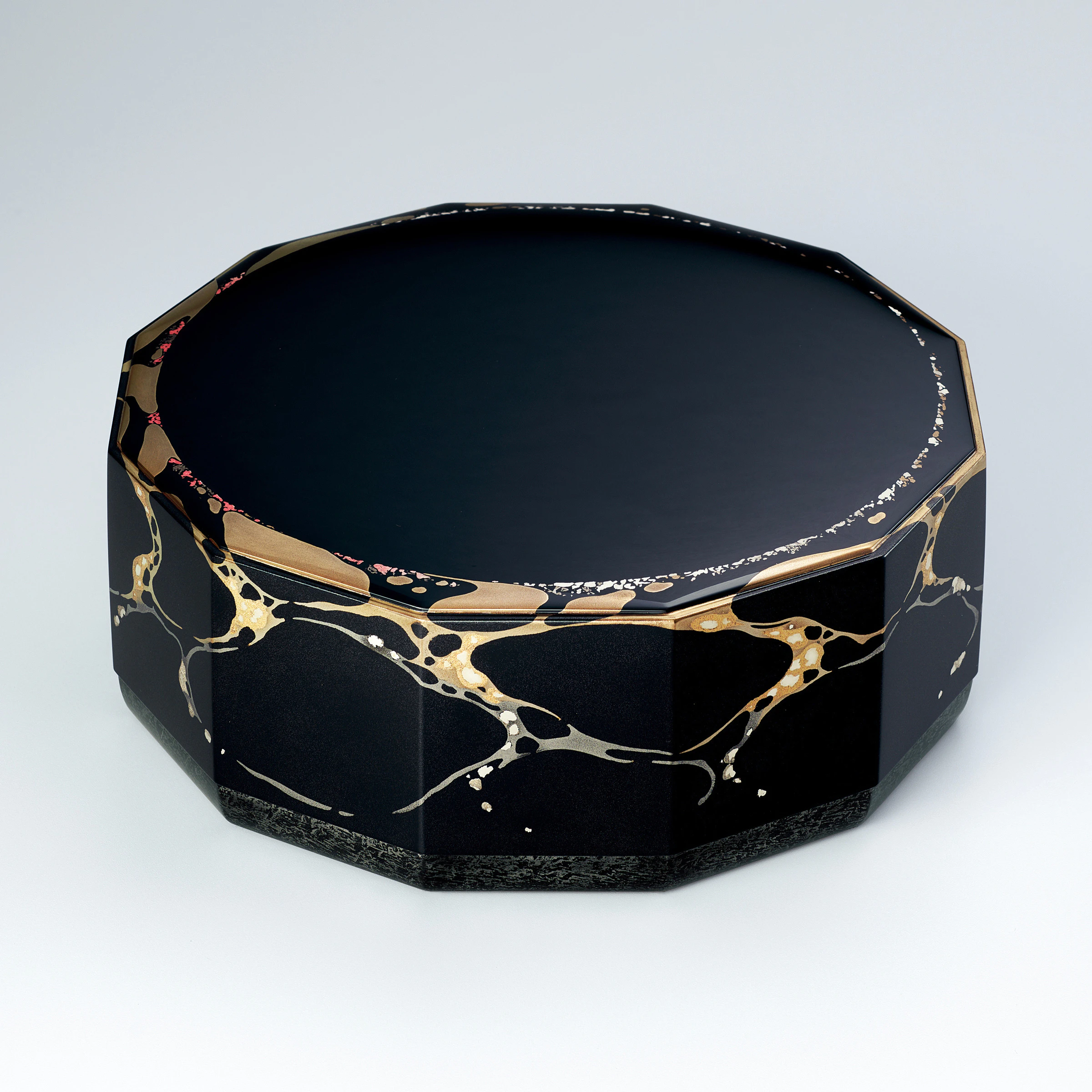
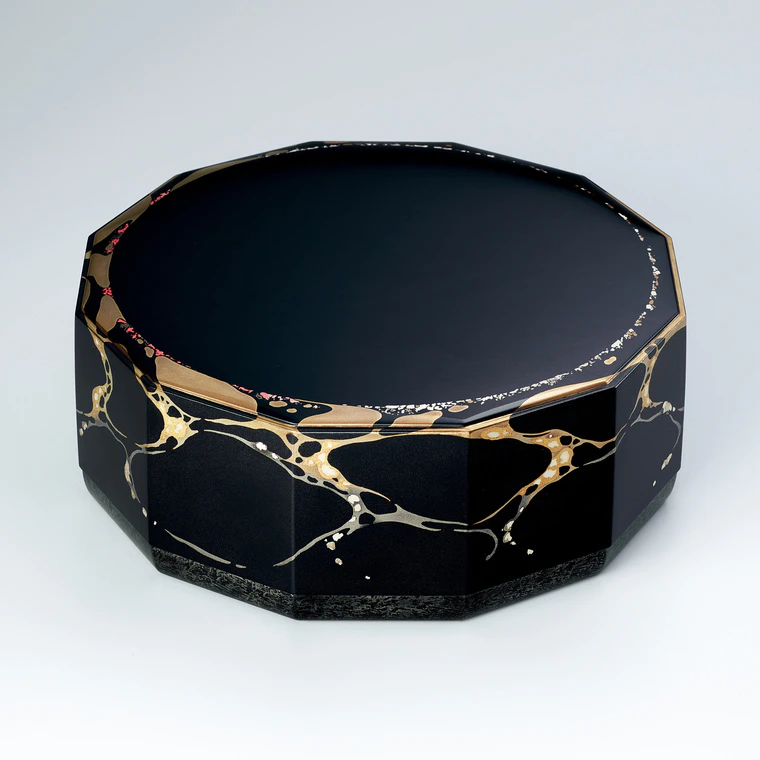
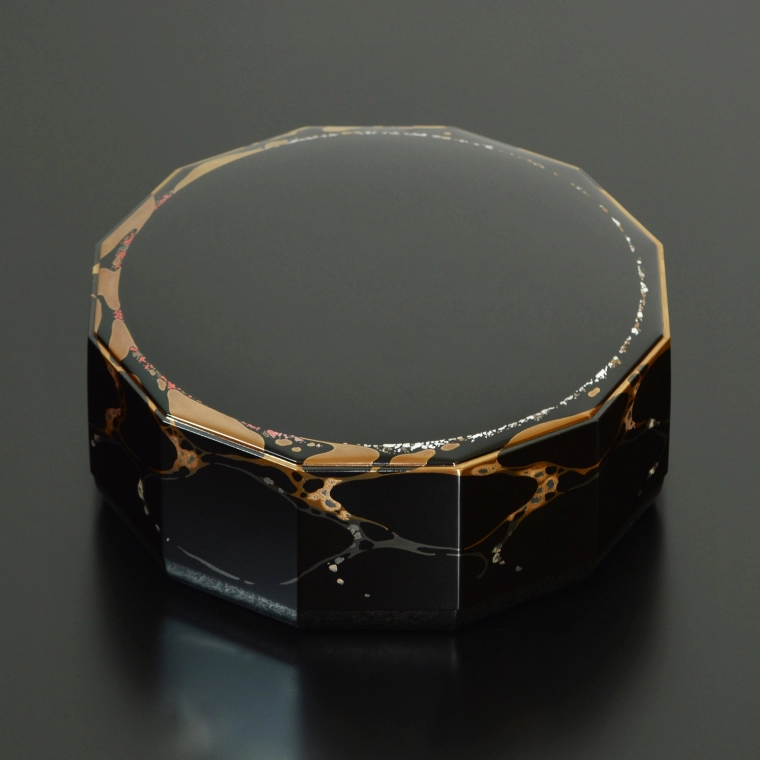
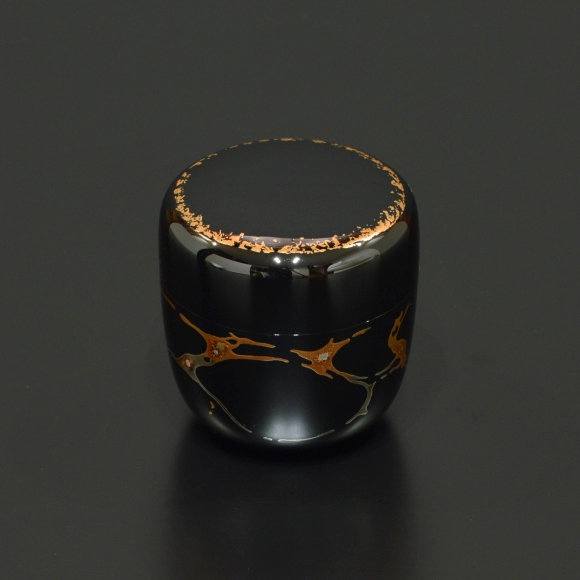
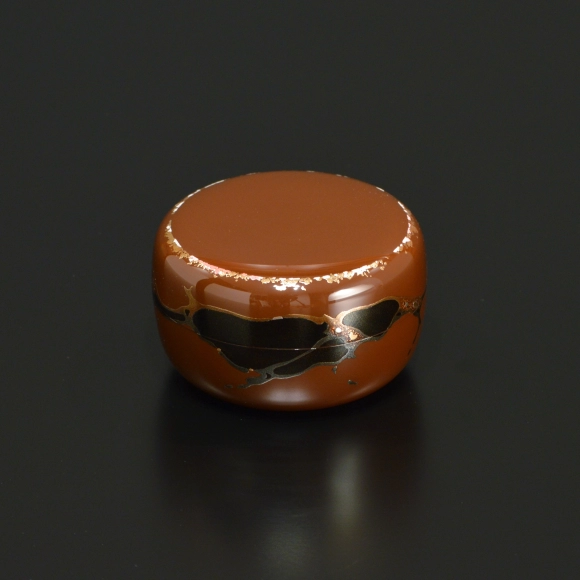
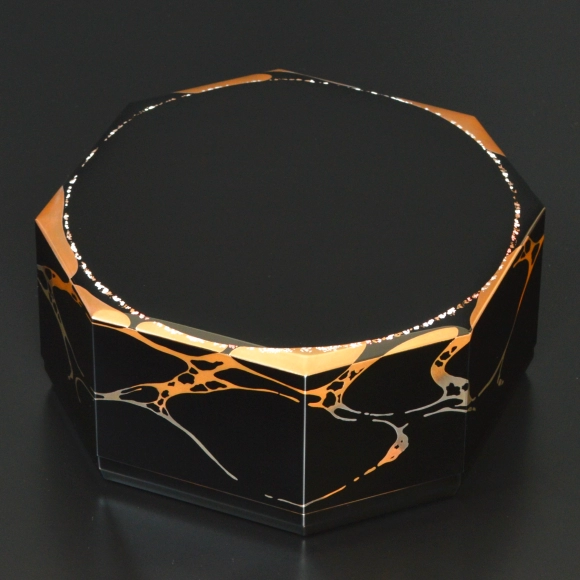
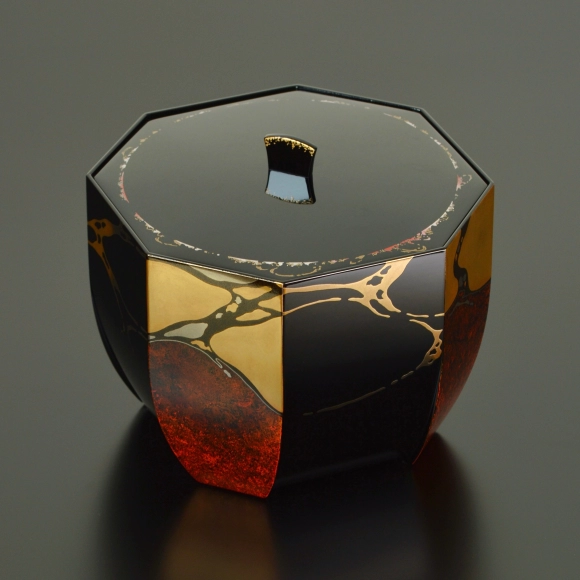
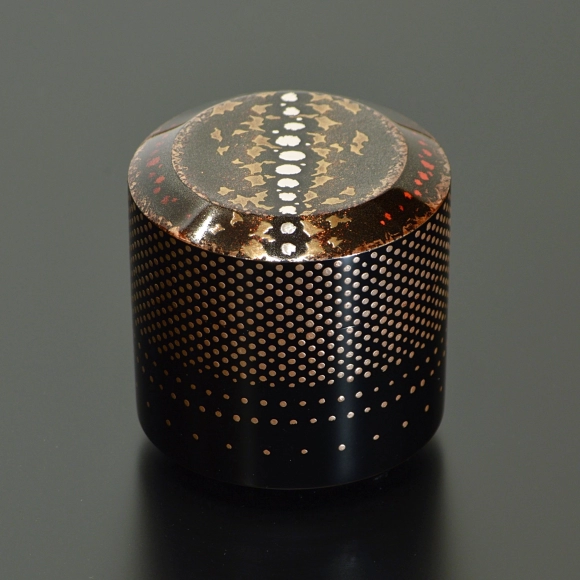
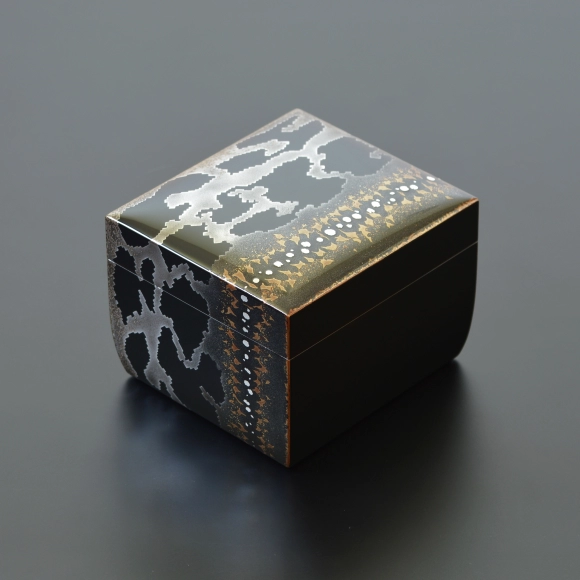
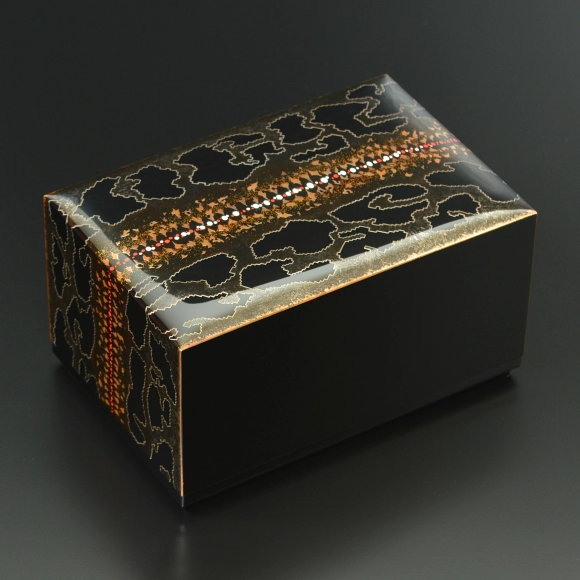
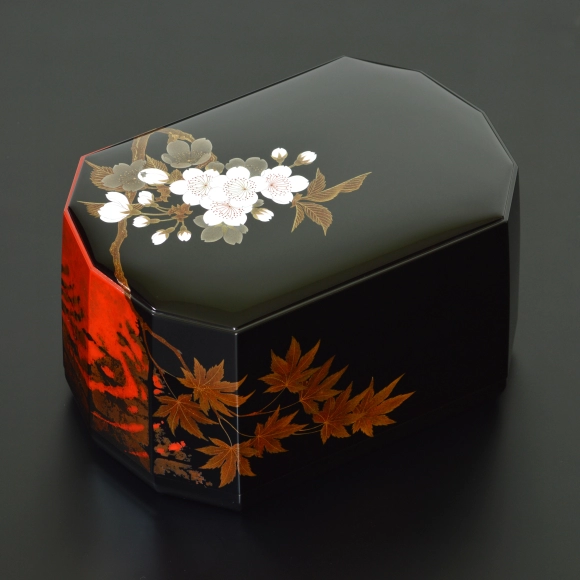
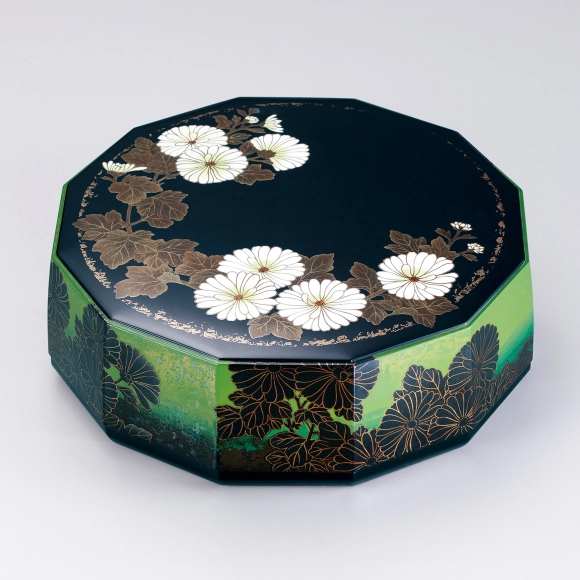
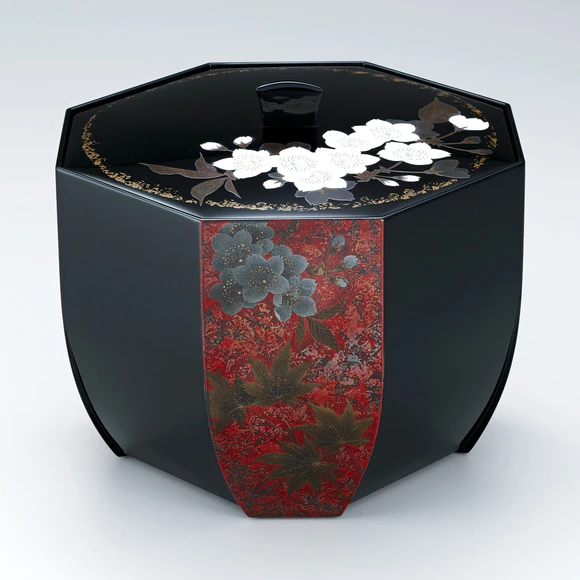
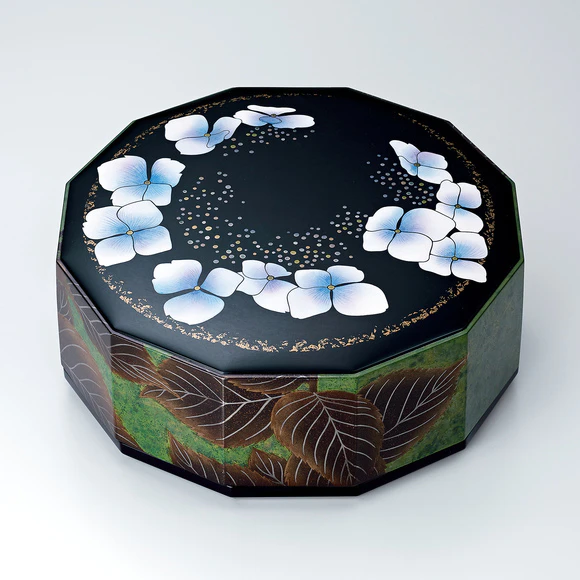
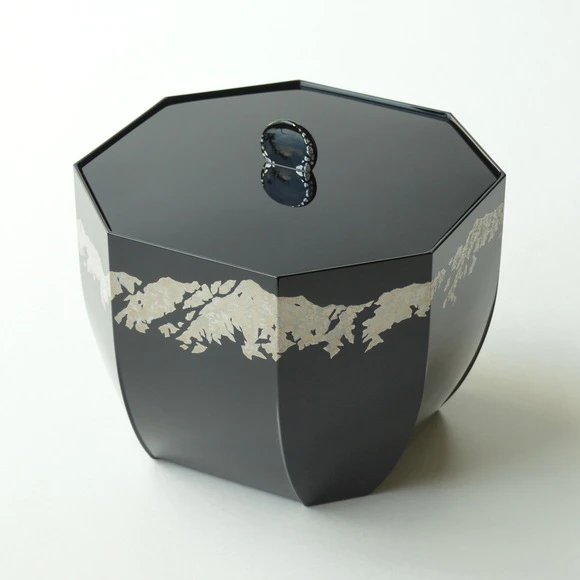
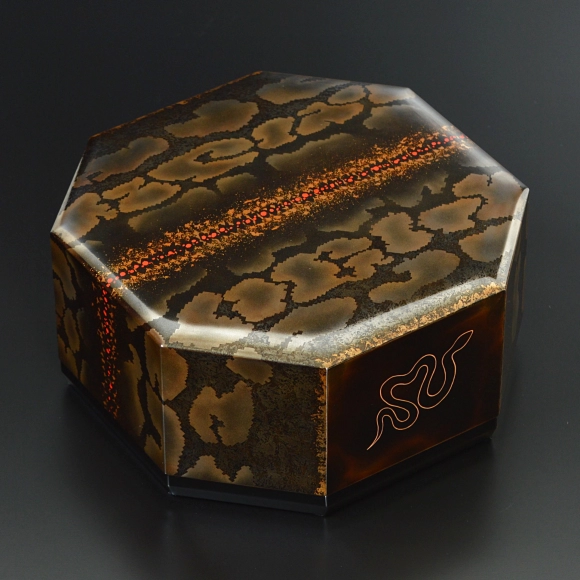
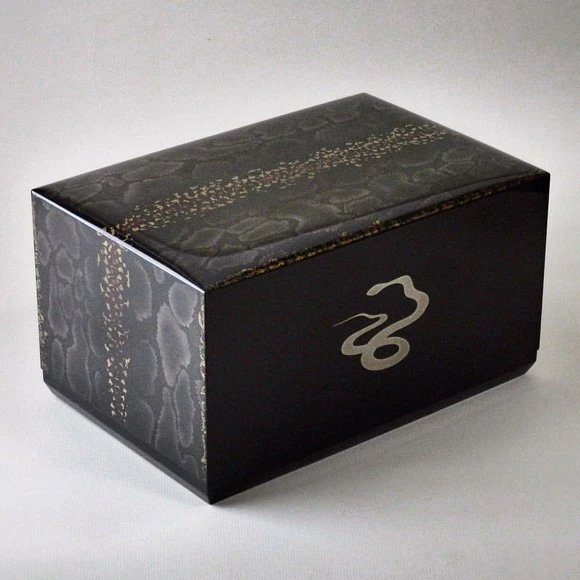
Coffer with Design in Johana Makie “Eclipse”
H 9.5 x W 24.2 x D 24.2 cm,Year.2024Jigoemon Ohara XVI
1979 -- Lacquerware
- Awarded 5 times at the Japan Kōgei Assoc. Exhibition
- Price Range Please Inquire
Description
-
CategoryLacquerware
-
MaterialsUrushi lacquer / Cypress / Hemp cloth / Gold powder / Silver powder / Pigments / Jinoko (powder of calcined diatomaceous earth) / Gold / Silver
-
DimensionsH 9.5 x W 24.2 x D 24.2 cm
-
Year presented2024
-
RarityUnique
-
Paulownia BoxIncluded
-
Artist SignatureSigned (name of artwork, paulownia box)
Techniques Used
Urushi-e
Urushi-e (“lacquer pictures”) is a decorative technique that consists of motifs painted in colored lacquer. Urushi-e is the oldest and most fundamental decorative lacquer technique.
Maki-e
Maki-e (literally “sprinkled pictures”) is a representative lacquerware technique that originated in Japan around 1,200 years ago. Maki-e is done by painting lacquer motifs on the surface of a piece using a fine brush and then sprinkling gold powder onto the lacquer before it hardens, producing luxurious decorations.
Lacquering
Lacquering (kyūshitsu) is the art of applying lacquer to a substrate using spatulas or brushes. The technique includes a range of processes, from reinforcing the substrate with cloth to building up the foundation and applying the middle- and top-coats. The final coat can be left as is (nuritate), polished with charcoal to a high-gloss finish (roiro shiage), or given one of several hundred alternative (kawarinuri) finishes. Lacquer application is known for both its technical difficulty and richly expressive qualities.
Awards received
- The 71st Japan Traditional Kōgei Exhibition (2024)
- Japan Kōgei Association New Artist Award
Comment on Award
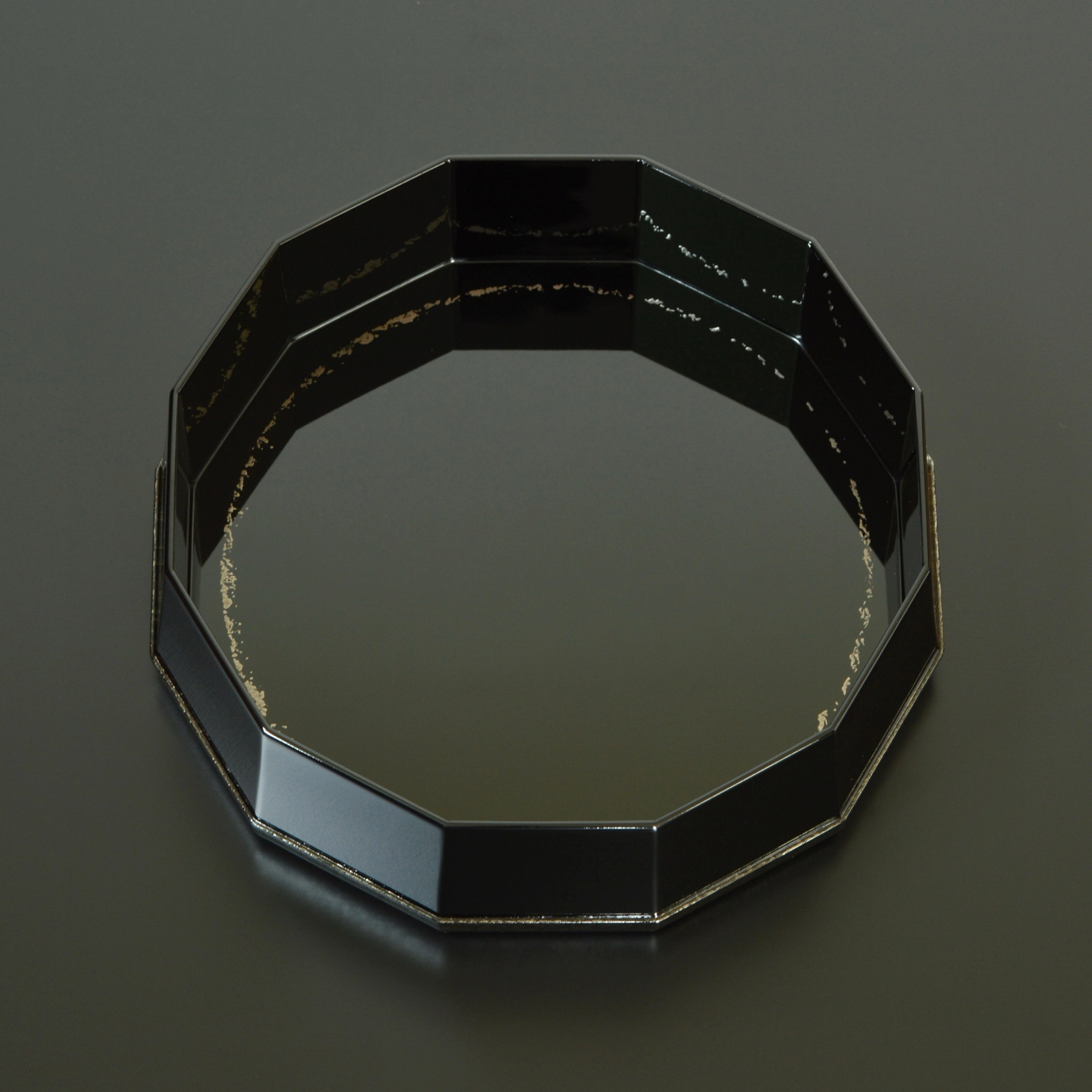
I expressed the solar eclipse on the top of the box, the lunar eclipse on the inside, and the water surface reflecting the light on the sides in this piece I named "Eclipse". With the transition of light, I expressed that important things don't change but keep developing, just like the transformation and enhancement of Johana makie. Starting with the reproduction of mitsudae (litharge painting) in the early 8th century, followed by white makie they came up with based on this, each generation added their originality and ingenuity and created and repaired Johana festival floats and food stalls. Jigoemon VIII who learned astronomy and Dutch studies made the "Armillary Sphere" in1812. This still exists and is a designated cultural property of Nanto City, Toyama. I will continue to study further and work hard for the development of the Johana culture towards the 450th anniversary of Johana makie.
(from the Japan Kōgei Association newsletter)