
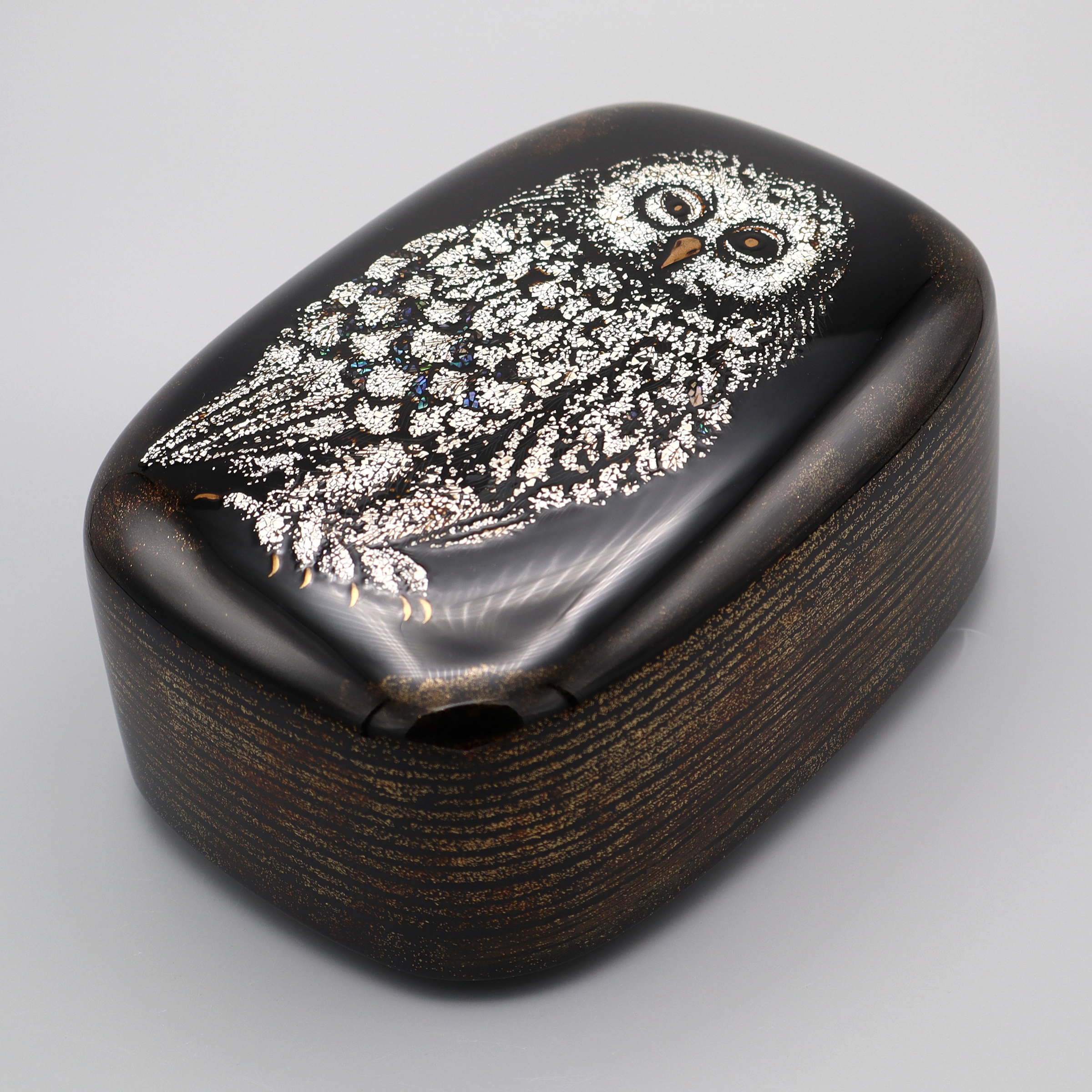
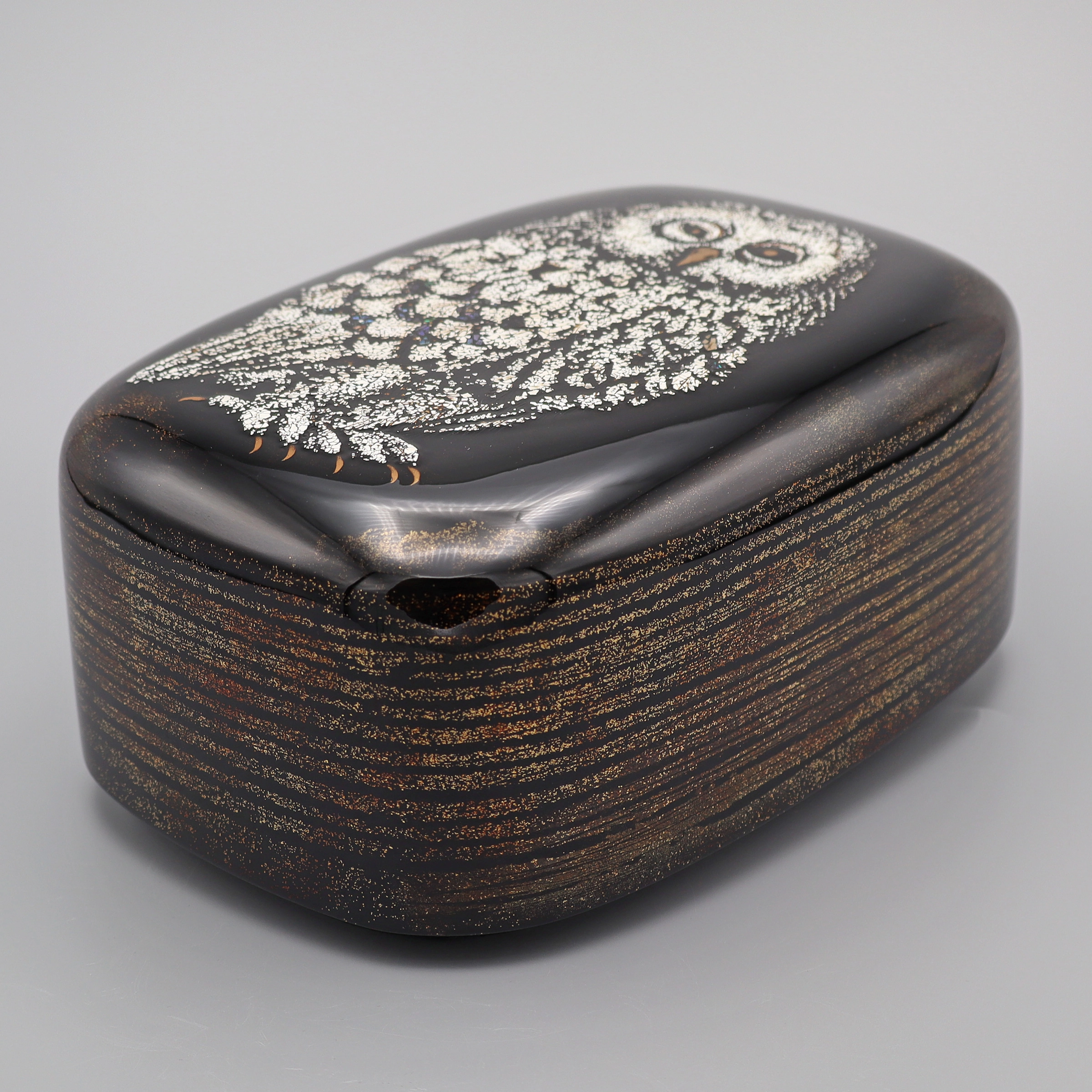
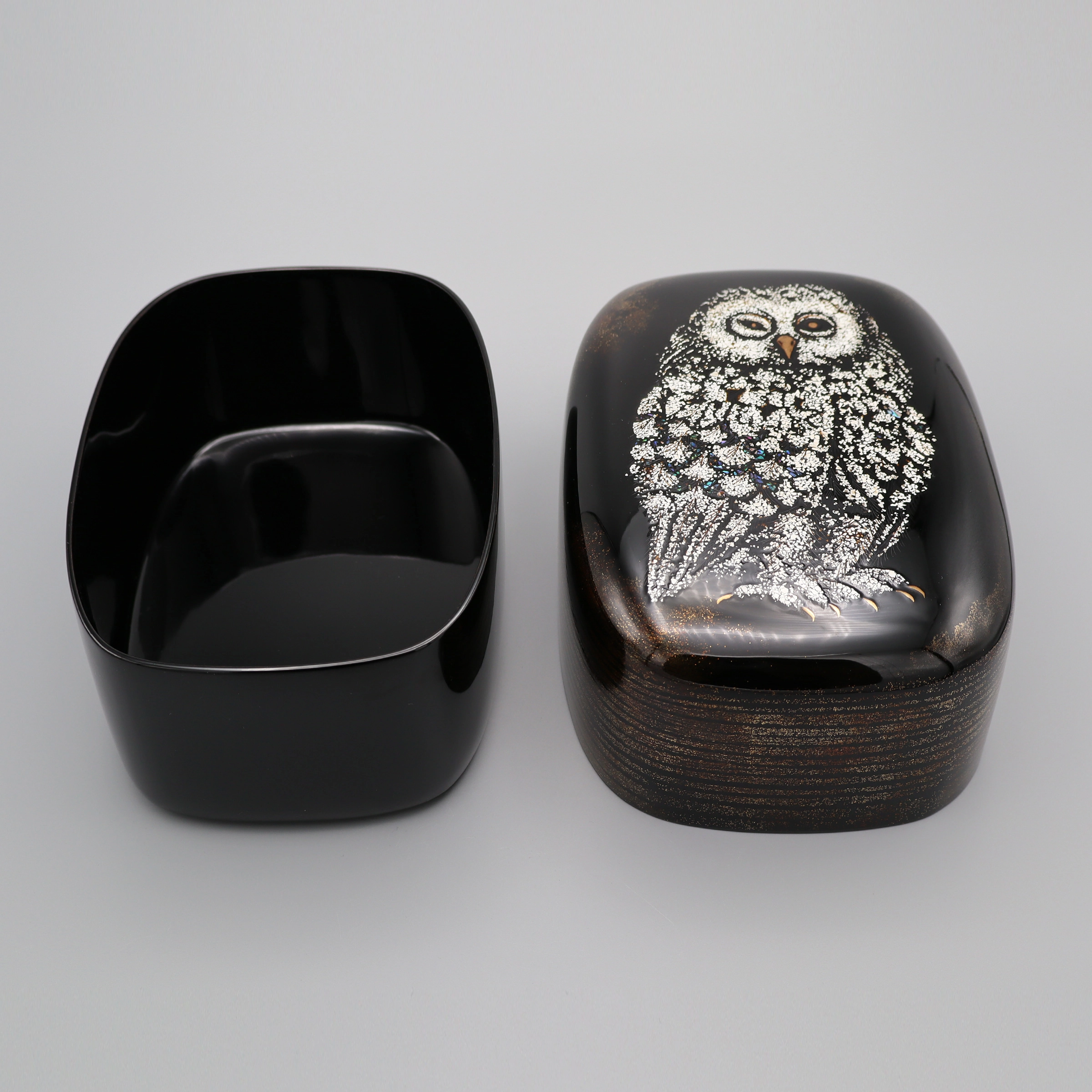
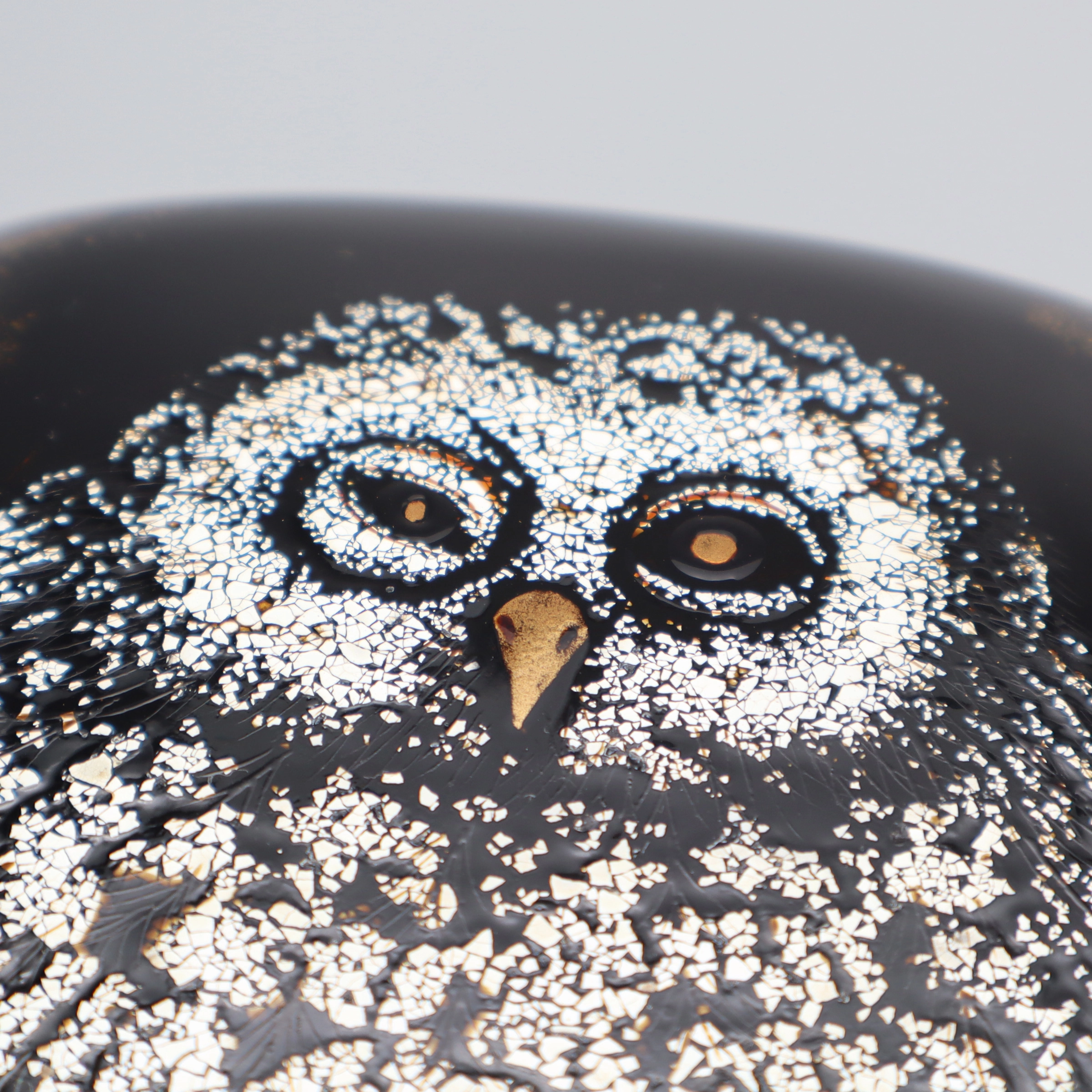
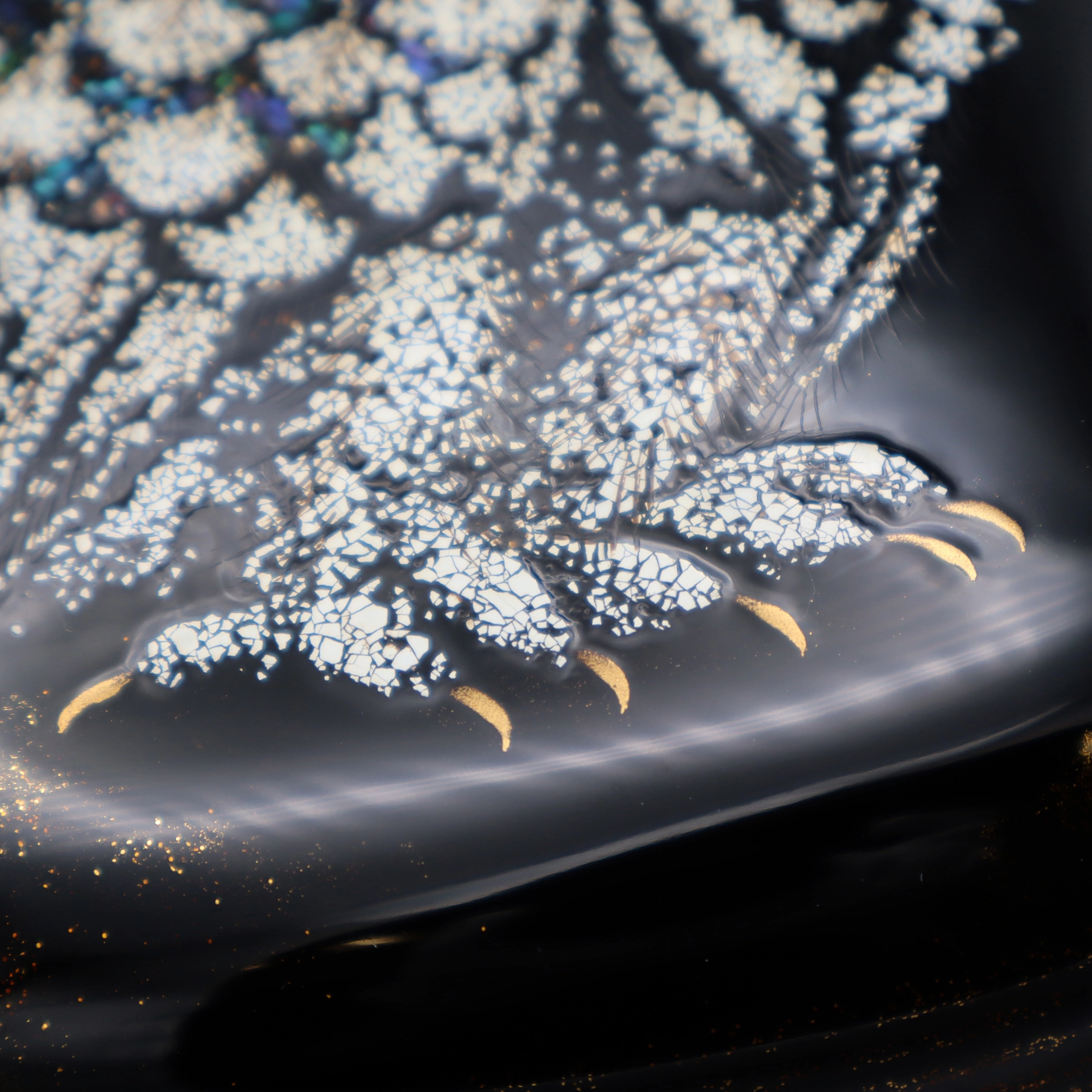
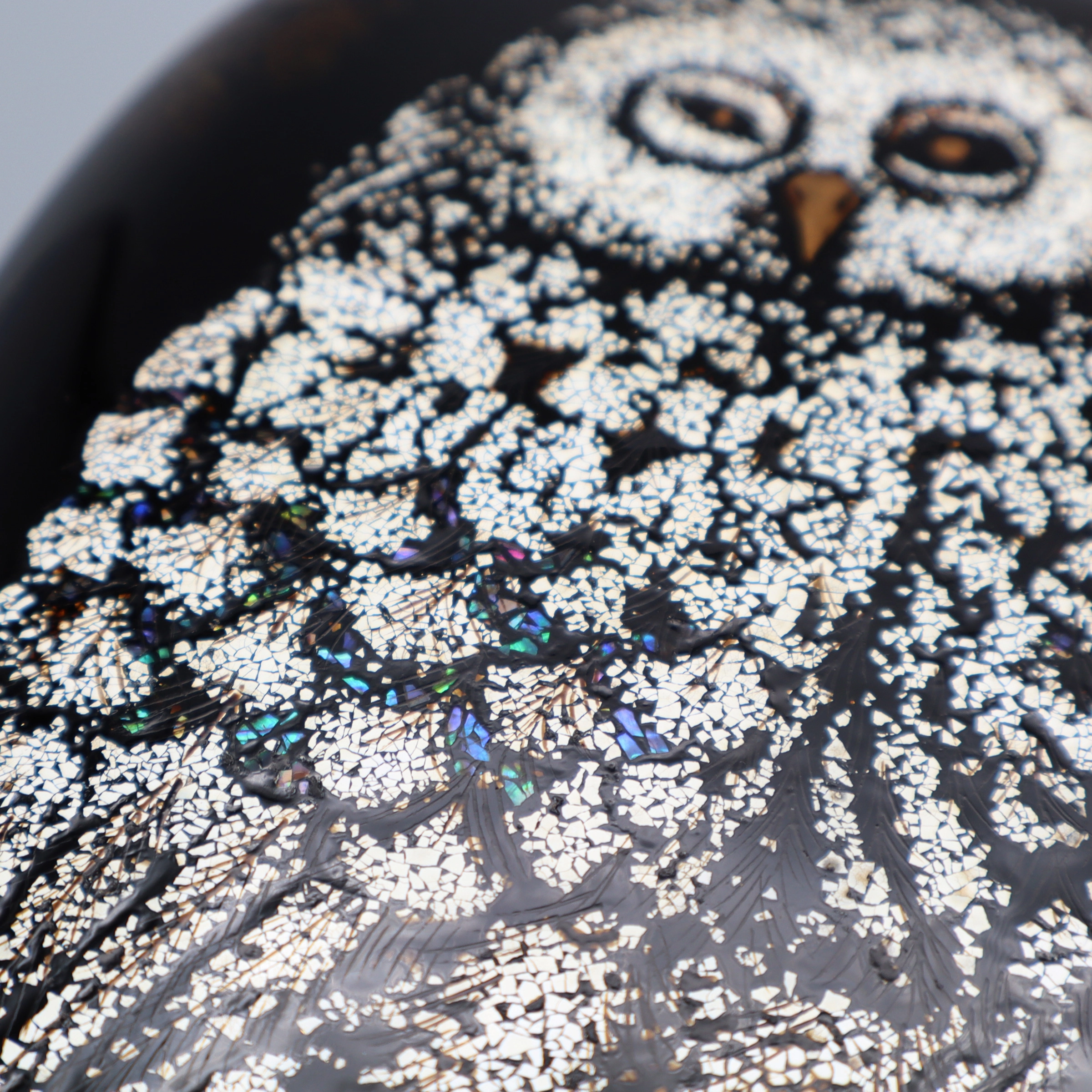
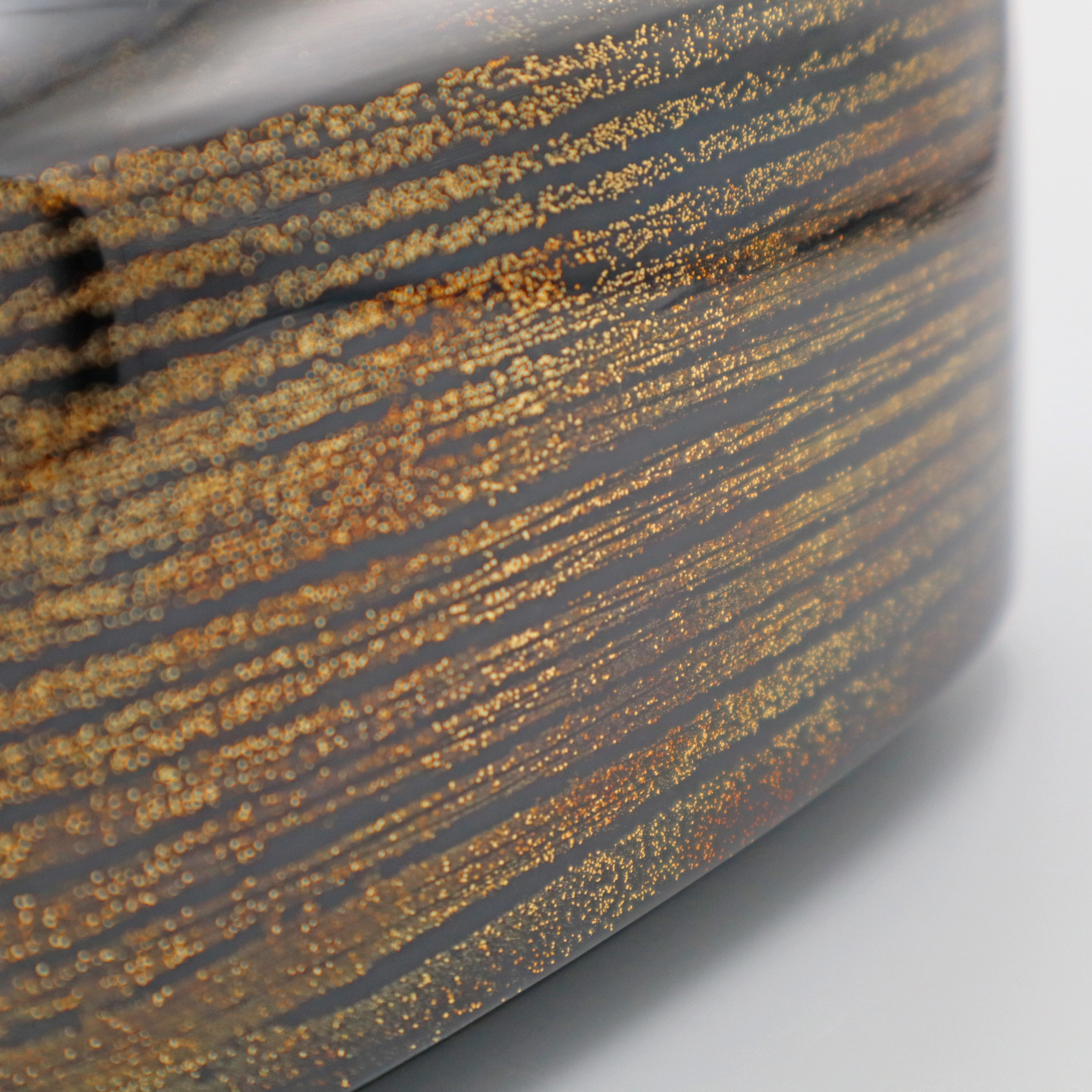
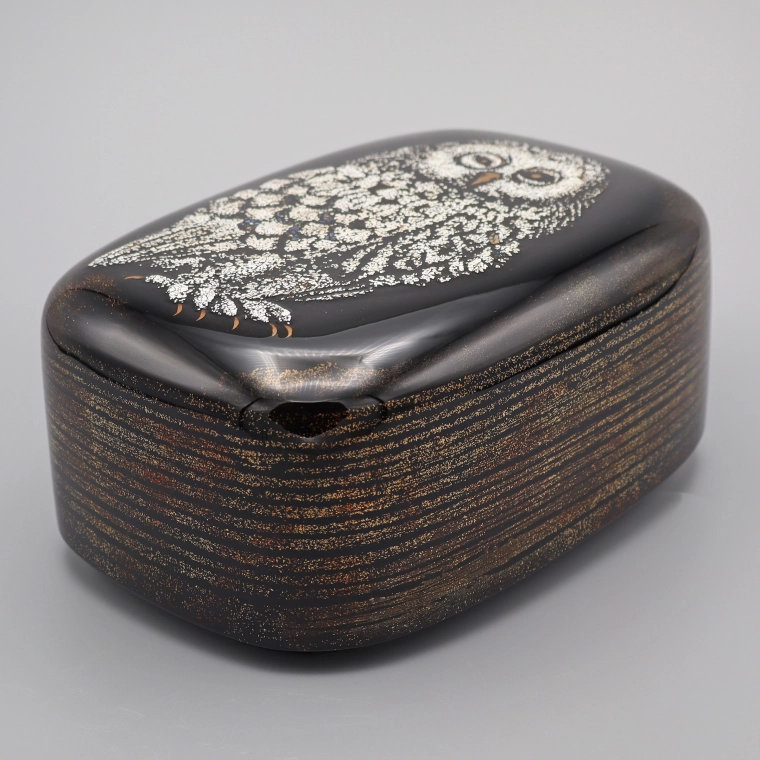
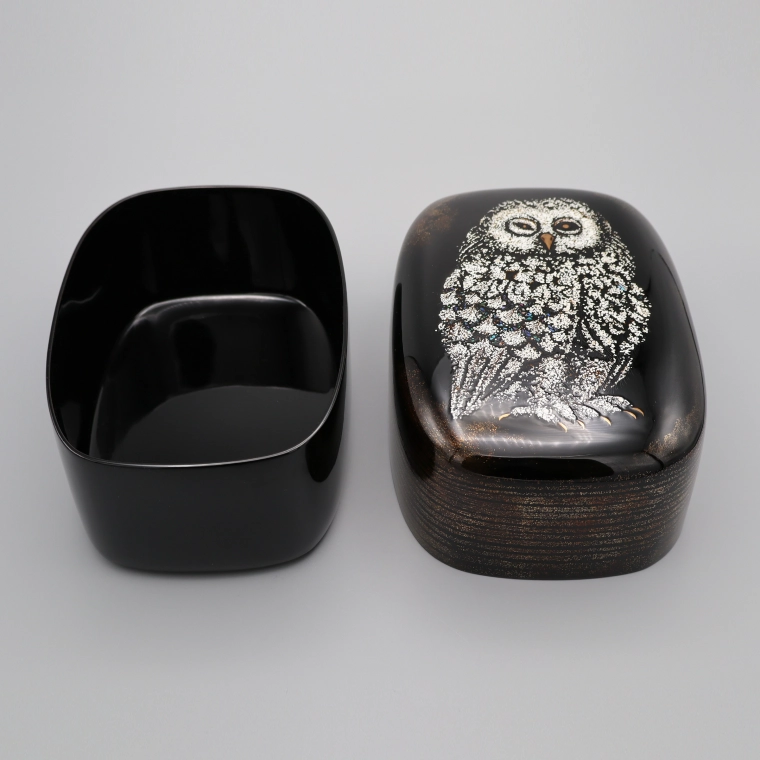
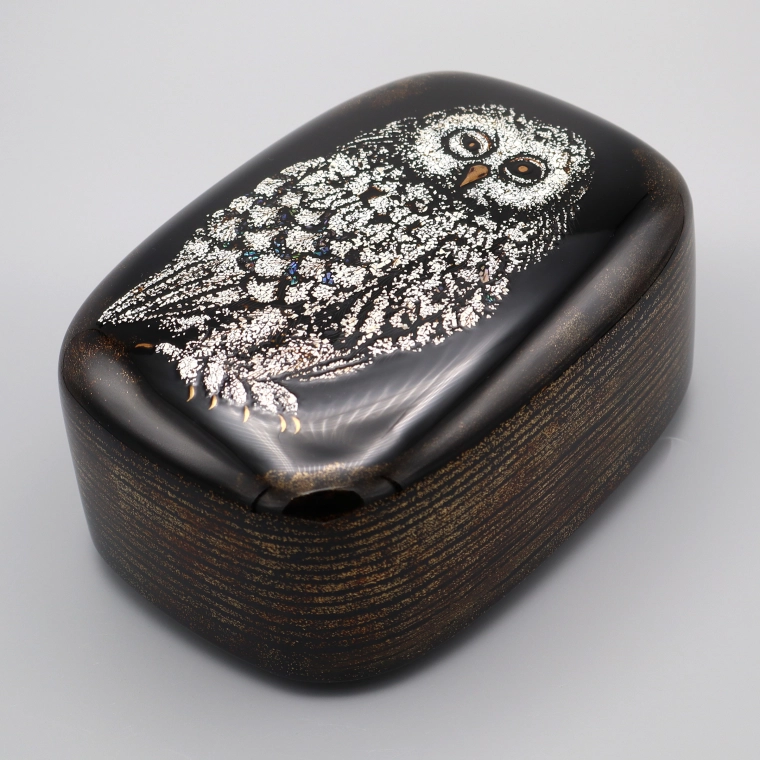
Kanshitsu Box with Design in Makie “Owl”
H 9.4 x W 13.7 x D 19.1 cmThe prices of the artworks on Gallery Japan are determined by the artists themselves and are published directly on the website.
- according to today's currency rate
- shipping fees not included
Miyako Uchino
1953 -- Lacquerware
-
Price Range
Under $11,000
Info
The prices of the artworks on Gallery Japan are determined by the artists themselves and are published directly on the website.
close
About the Artwork
Exhibited and available for purchase at Hotel Chinzanso Tokyo, the Executive Lounge "Le Ciel" (lounge exclusive for suite room guests)
Exhibition Period:From Oct. 27th 2026 to the end of Jan. 2027
* If you wish to purchase, please note that you will receive the purchased items after the exhibition period.
Description
-
CategoryLacquerware
-
Materials
-
DimensionsH 9.4 x W 13.7 x D 19.1 cm
-
RarityUnique
-
Paulownia BoxIncluded
-
Artist SignatureSigned (artwork)
Techniques Used
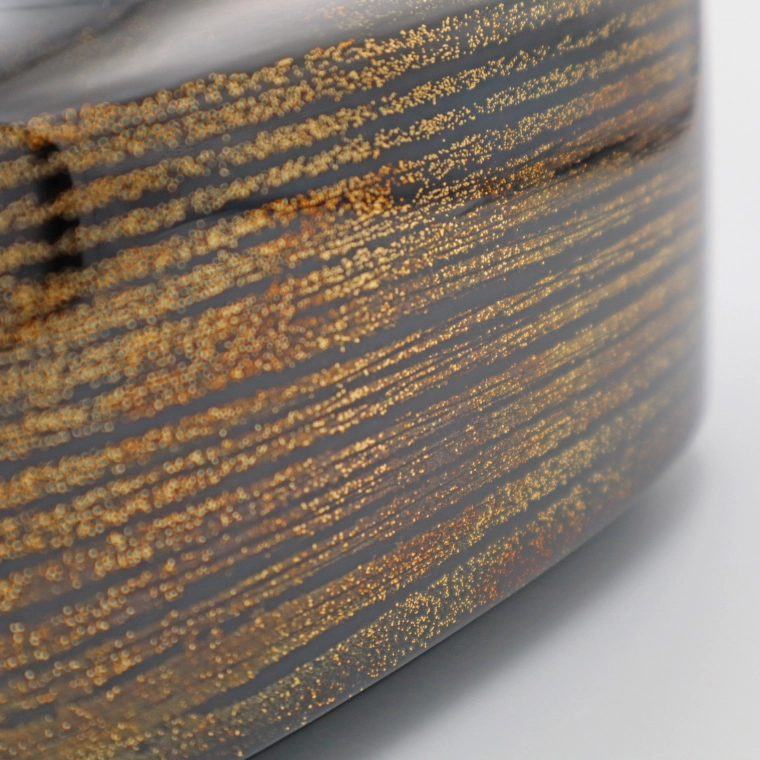
Dry lacquer
For works of dry lacquer (kanshitsu), first a clay form is created and plaster is used to take a mold of the form. Next, repeated layers of hemp cloth and lacquer are applied to the mold until they are built up to the desired thickness. Finally, the mold is removed and additional coats of lacquer are applied to finish the piece. The hemp fibers are strengthened when the lacquer bonds with them, making dry lacquer an excellent technique for creating sturdy forms with a significant degree of freedom.
Maki-e
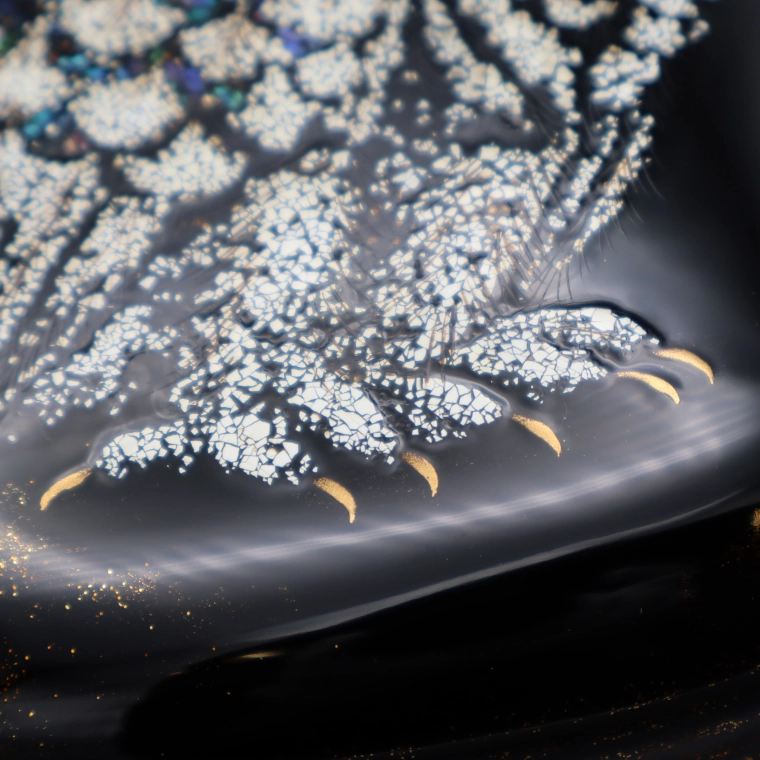
Maki-e (literally “sprinkled pictures”) is a representative lacquerware technique that originated in Japan around 1,200 years ago. Maki-e is done by painting lacquer motifs on the surface of a piece using a fine brush and then sprinkling gold powder onto the lacquer before it hardens, producing luxurious decorations.
Mother-of-pearl inlay (Raden)
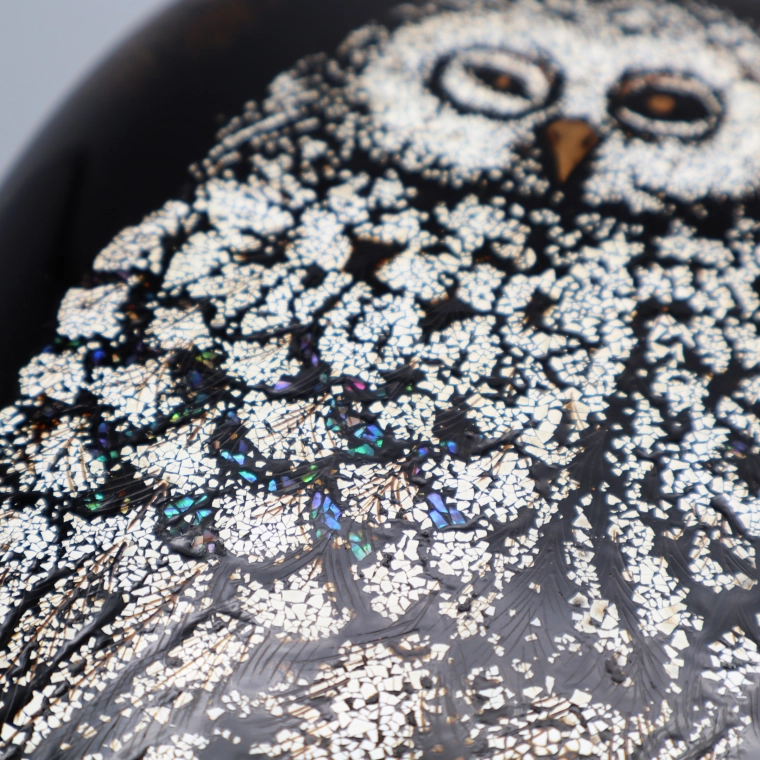
Mother-of-pearl inlay (Raden) is a decorative technique that uses the iridescent inner layer of abalone shell, turban shell, pearl oyster shell, or other mollusk shells. The technique came to Japan from China 1,300 years ago, and pieces featuring mother-of-pearl inlay are included among the artifacts at the Shōsōin Repository in Nara.
Eggshell inlay
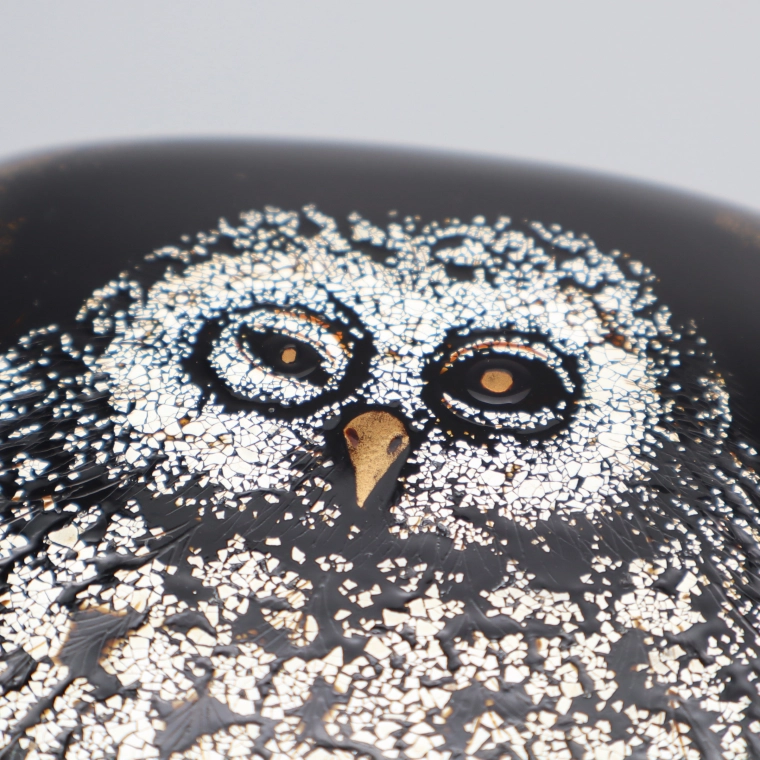
Eggshell inlays (rankaku) are created by applying finely crushed eggshells to painted lacquer motifs. The eggshells make it possible to create vivid whites, a color that is difficult to reproduce with colored lacquer. Normally, the shells of quail eggs are used.
The prices of the artworks on Gallery Japan are determined by the artists themselves and are published directly on the website.


