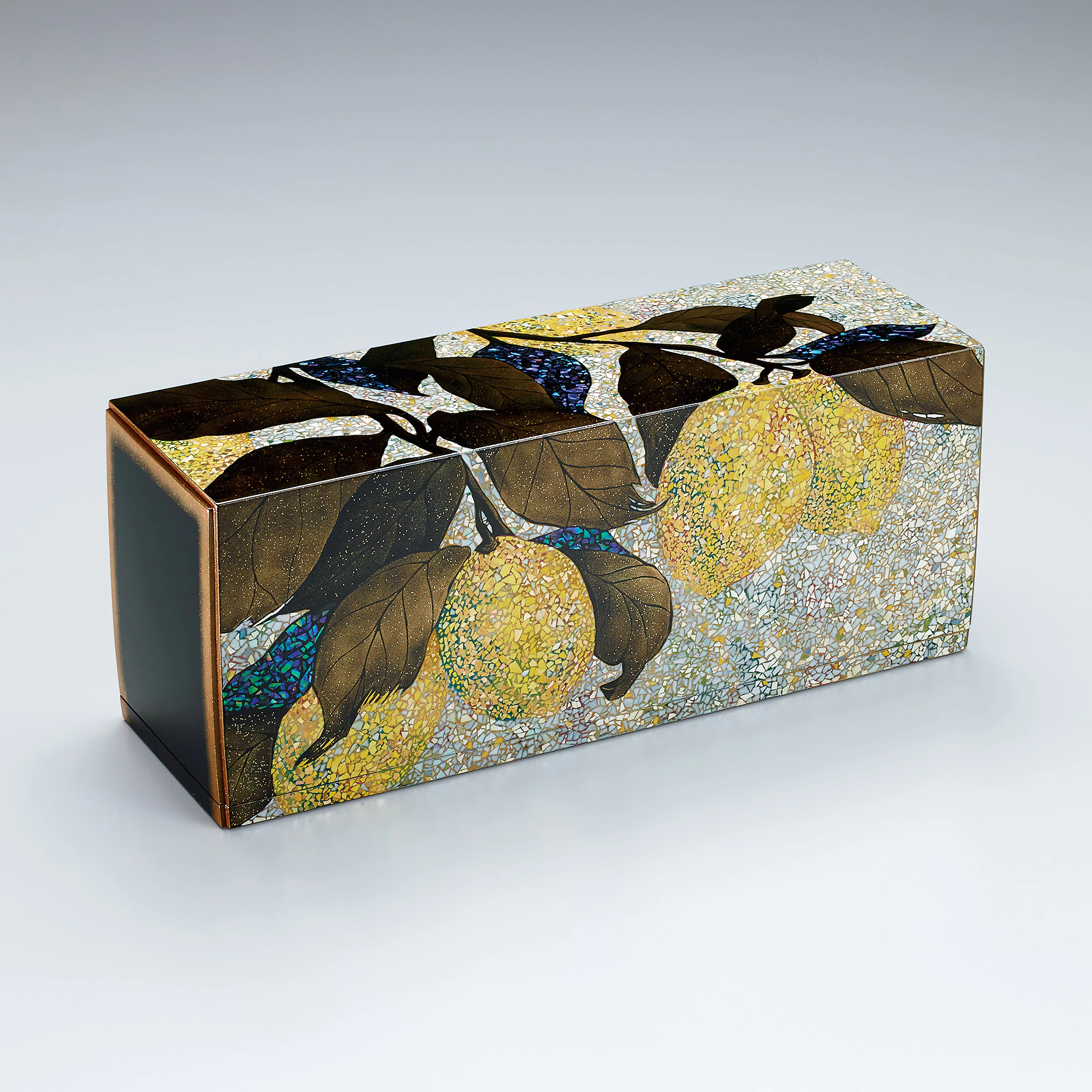
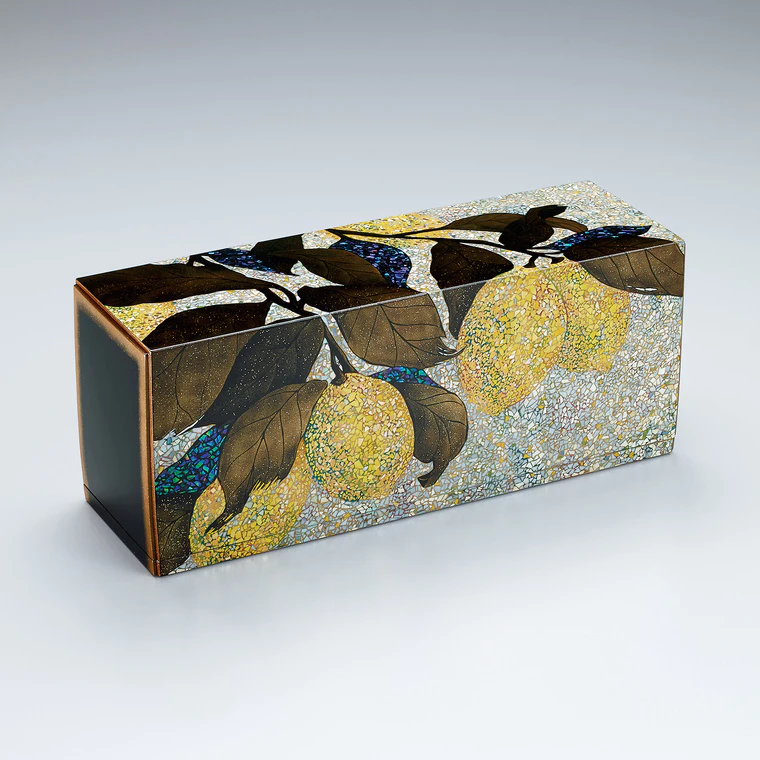
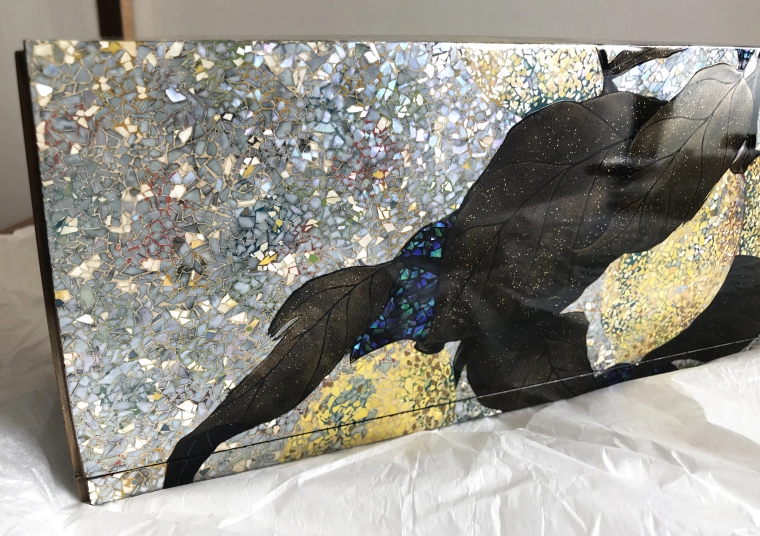
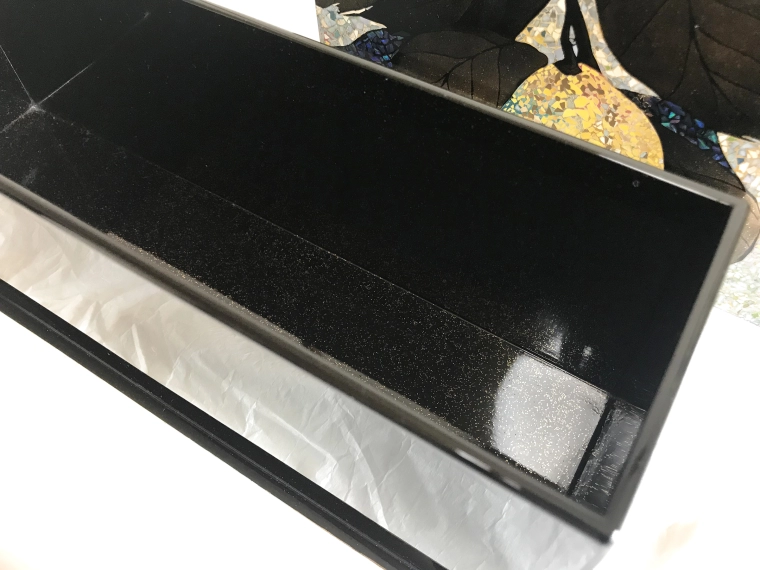
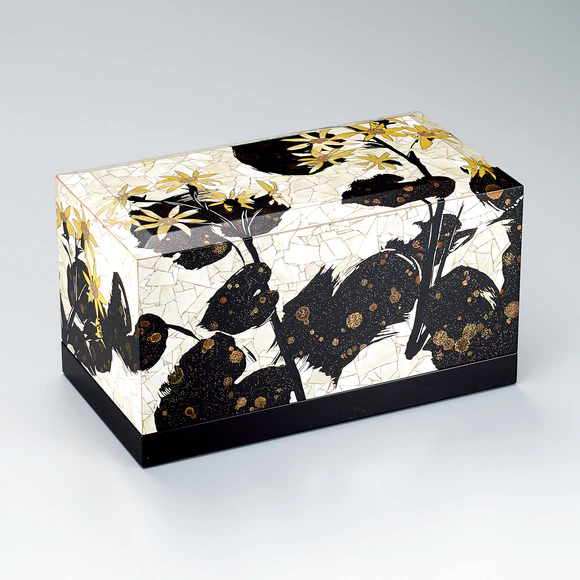
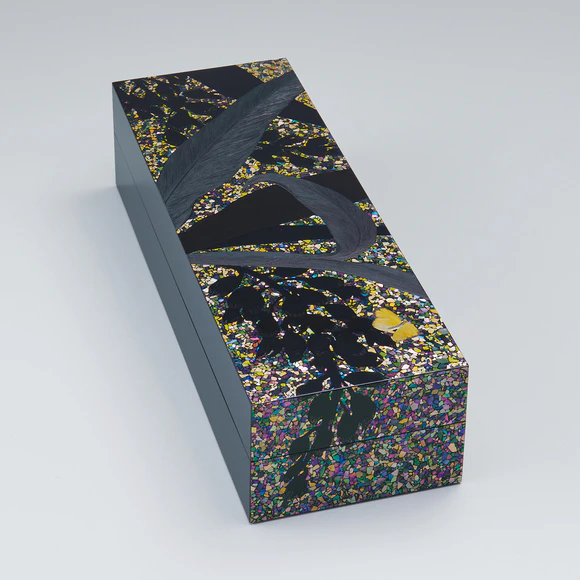
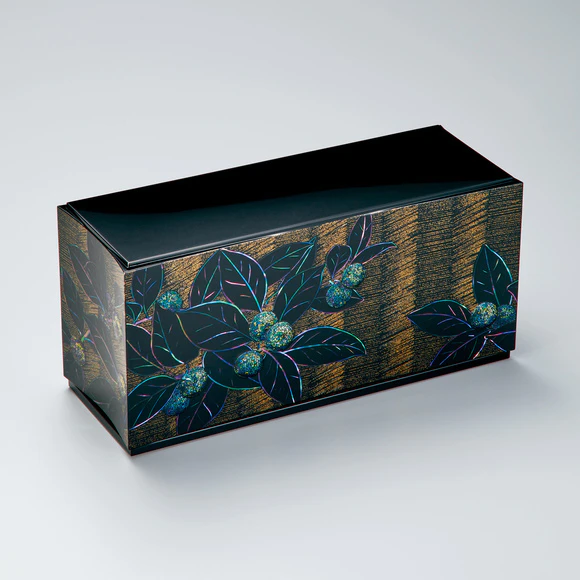
Box with Design in Irogai and Makie “Lemon Tree”
H 13.5 x W 32.5 x D 10.5 cm,Year.2015Shimpei Matsuzaki
1981 -- Lacquerware
- Public Collections : National Crafts Museum etc.
- Price Range Please Inquire
About the Artwork
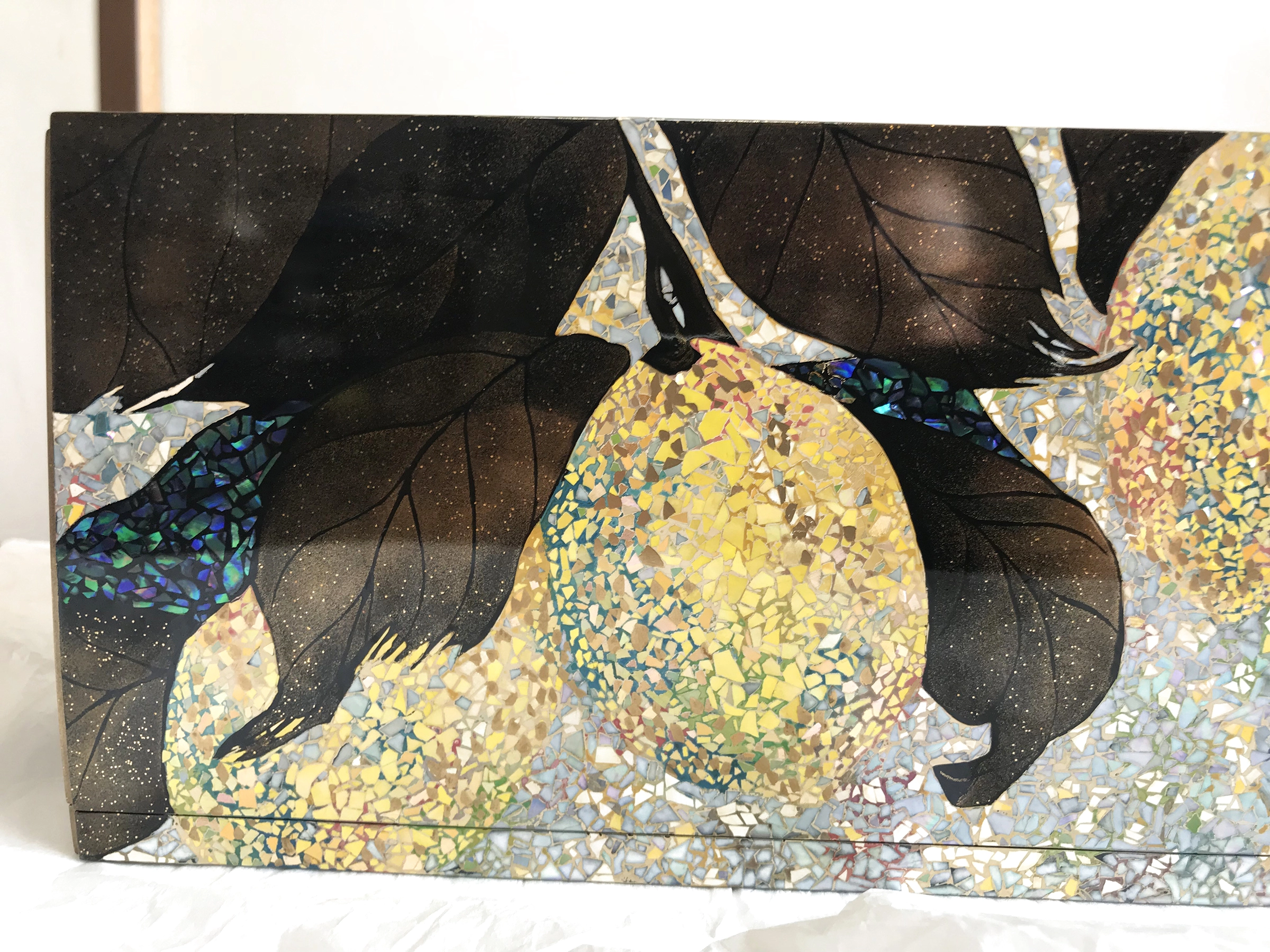
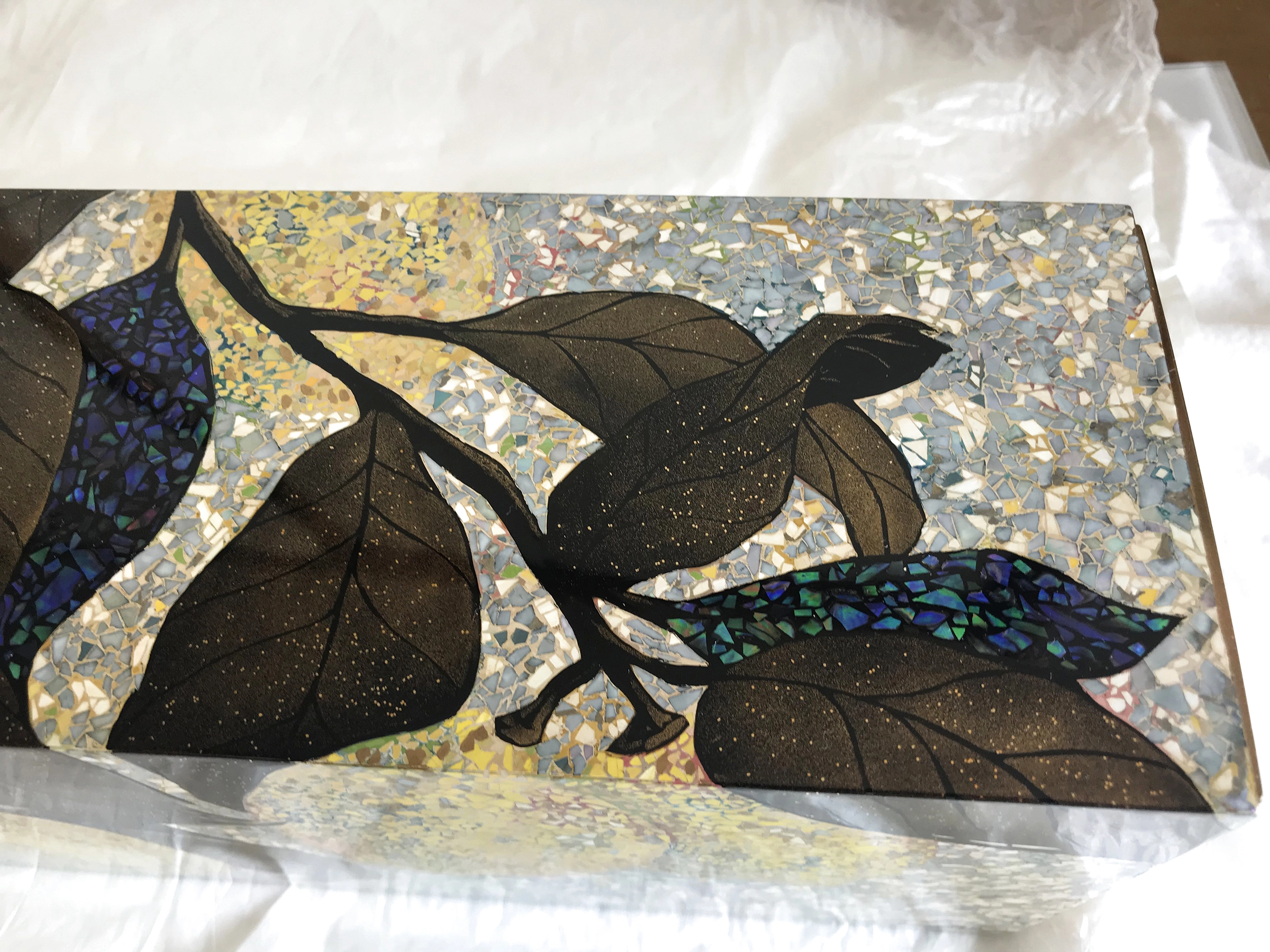
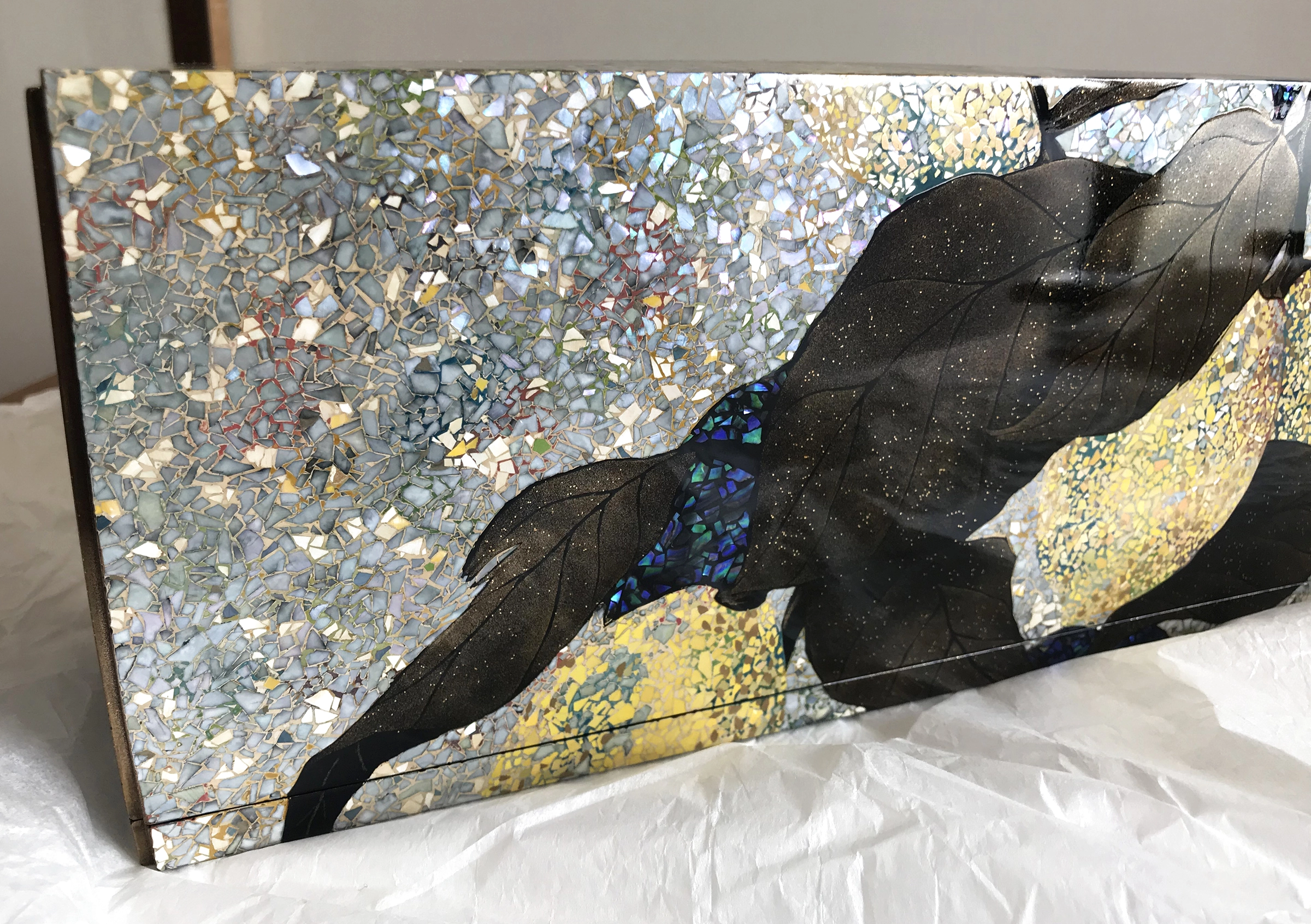
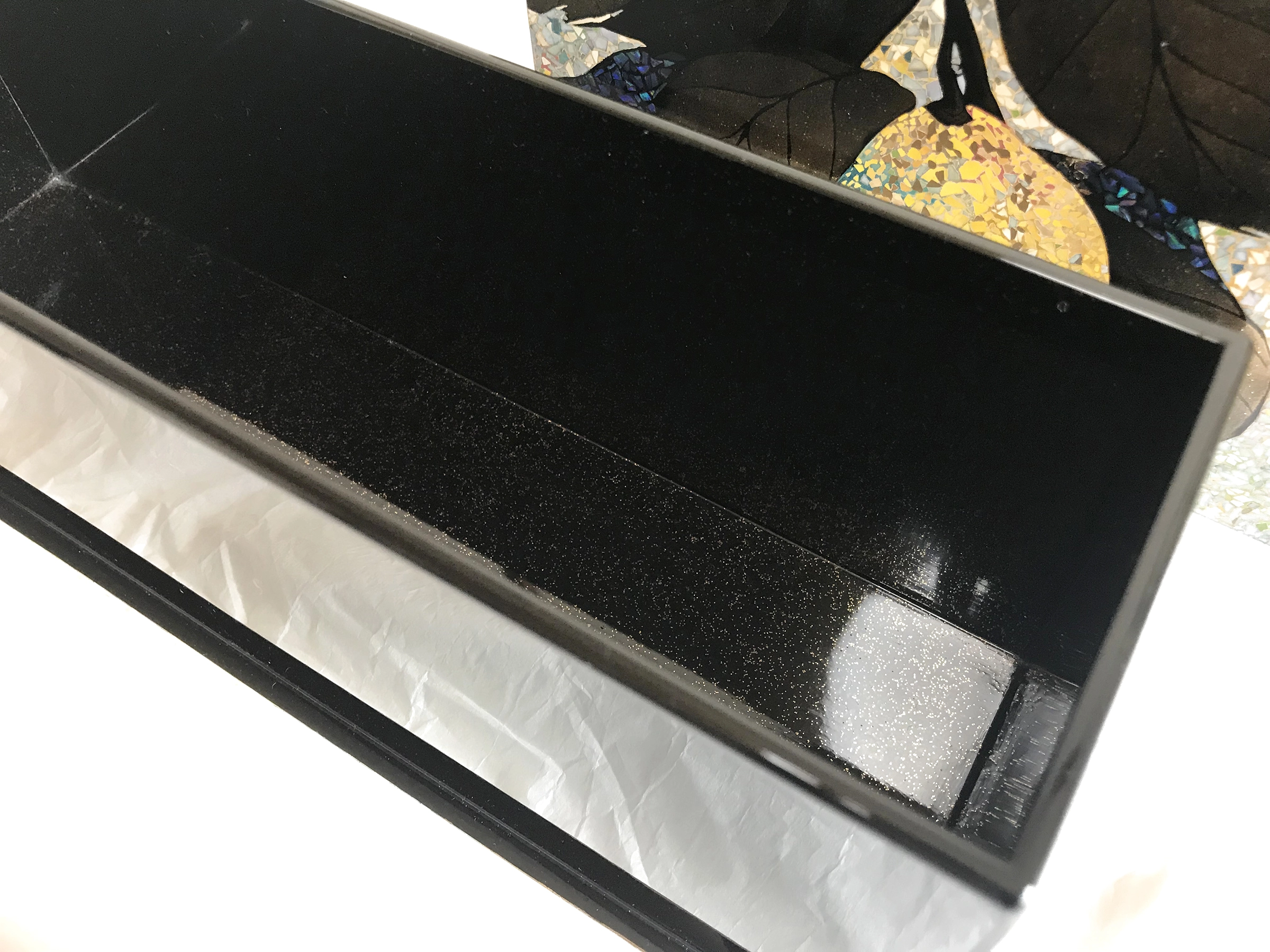
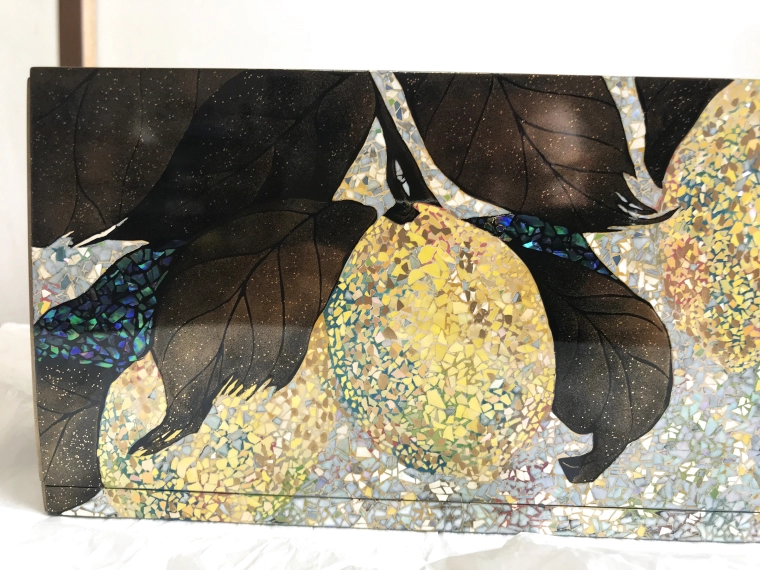
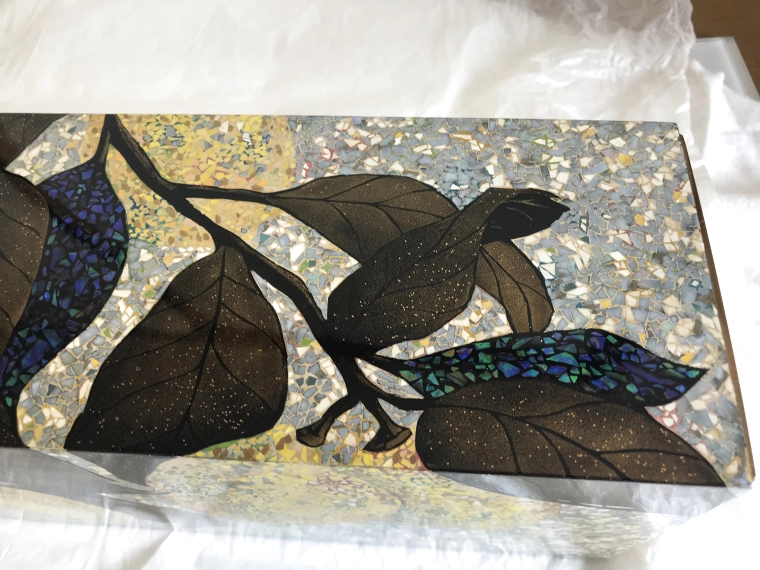
Expressing lemons ripening in the sunlight using traditional lacquer art decorating techniques, "makie" and "mother-of-pearl inlay" . I used the fusezaishiki technique, which is a technique to color thinly processed white-lipped pearl oyster with color lacquer. With the contrast of the colored white-lipped pearl oyster and black lacquer, I was able to express the vivid colors of the sunlight and lemon motif. I wanted to add some color to the atmosphere with this box by expressing a sense of the season with the colors and freshness of the lemons ripening on the trees.
Description
-
CategoryLacquerware
-
MaterialsUrushi lacquer / Cypress / Black-lipped pearl oyster / Shells / Gold powder / Silver powder / Pigments / Mastic gum
-
DimensionsH 13.5 x W 32.5 x D 10.5 cm
-
Year presented2015
-
RarityUnique
-
Collection ofPrivate Owner
Techniques Used
Maki-e
Maki-e (literally “sprinkled pictures”) is a representative lacquerware technique that originated in Japan around 1,200 years ago. Maki-e is done by painting lacquer motifs on the surface of a piece using a fine brush and then sprinkling gold powder onto the lacquer before it hardens, producing luxurious decorations.
Mother-of-pearl inlay (Raden)
Mother-of-pearl inlay (Raden) is a decorative technique that uses the iridescent inner layer of abalone shell, turban shell, pearl oyster shell, or other mollusk shells. The technique came to Japan from China 1,300 years ago, and pieces featuring mother-of-pearl inlay are included among the artifacts at the Shōsōin Repository in Nara.
Selected exhibitions
- The 62th Japan Traditional Kōgei Exhibition (2015)
- Selected
Please feel free to contact us to commission work, check artworks available for purchase etc.
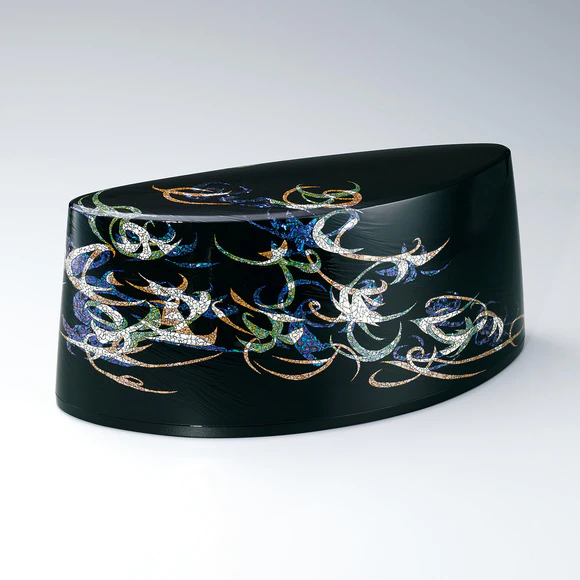
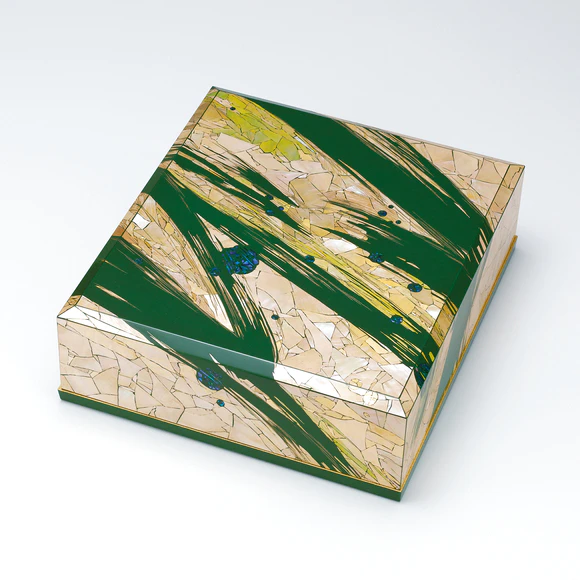
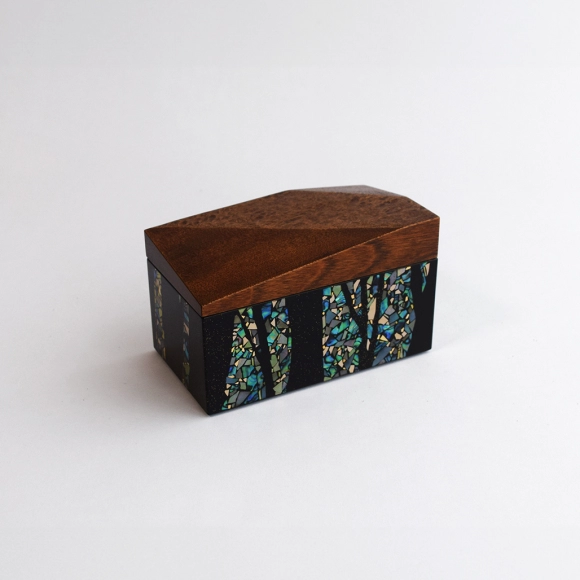
![The box with RADEN and MAKIE [Clear stream]](https://kougeifs.galleryjapan.com/files/galleryjapan/craft/4639/m_1x_95662_053e82cc9abe7e34bf13f099dff78848.jpg.webp)
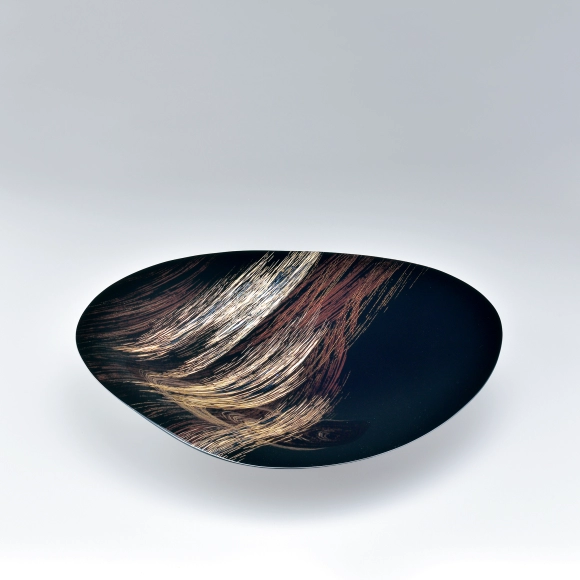
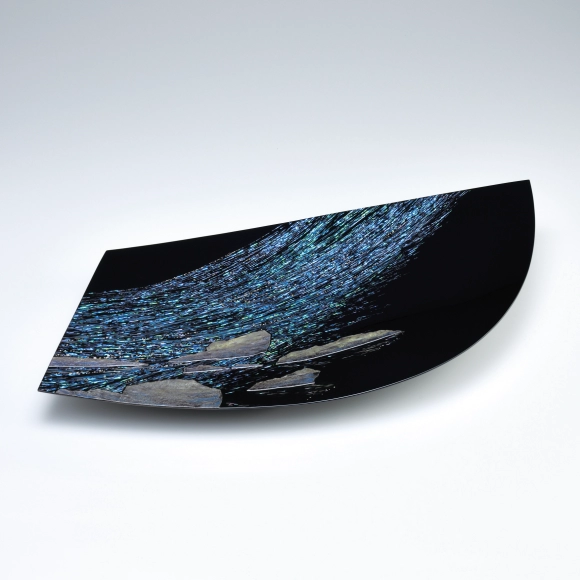
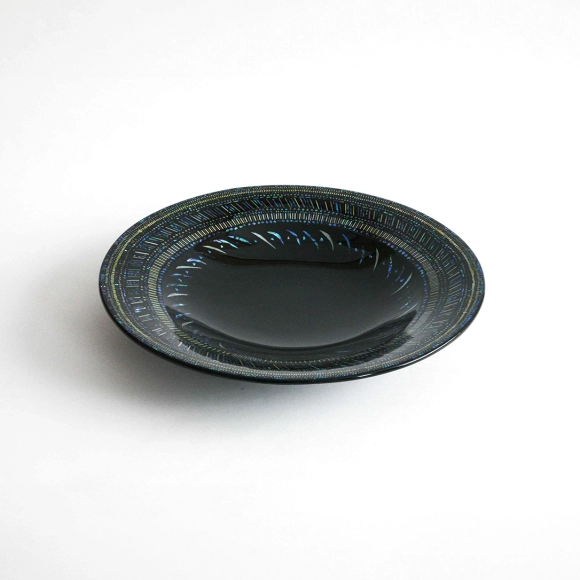
![The dish with RADEN and MAKIE [Water's edge]](https://kougeifs.galleryjapan.com/files/galleryjapan/craft/4639/m_1x_95661_4b8d194b914fb7605b79c5e67db10e08.jpg.webp)
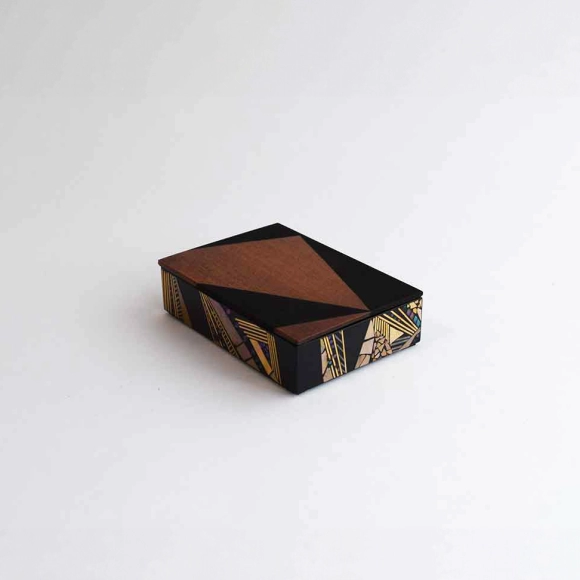
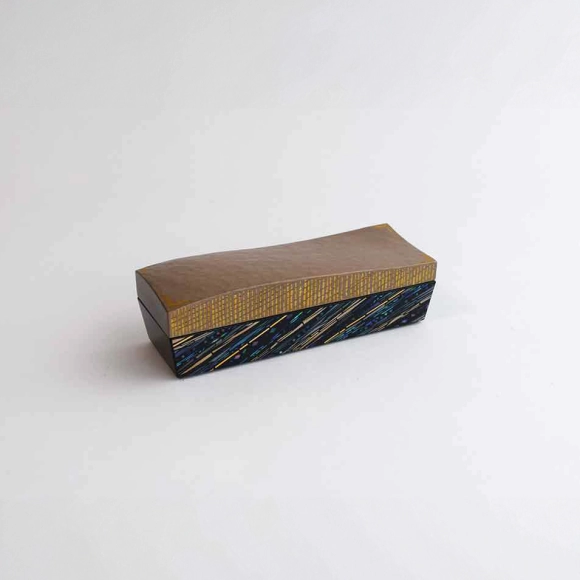
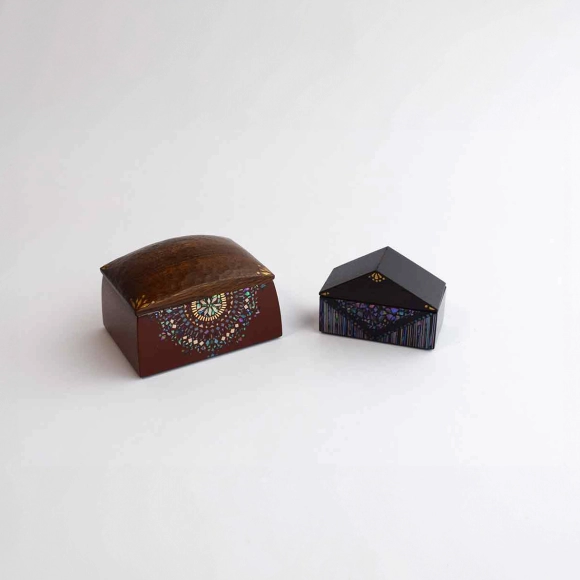
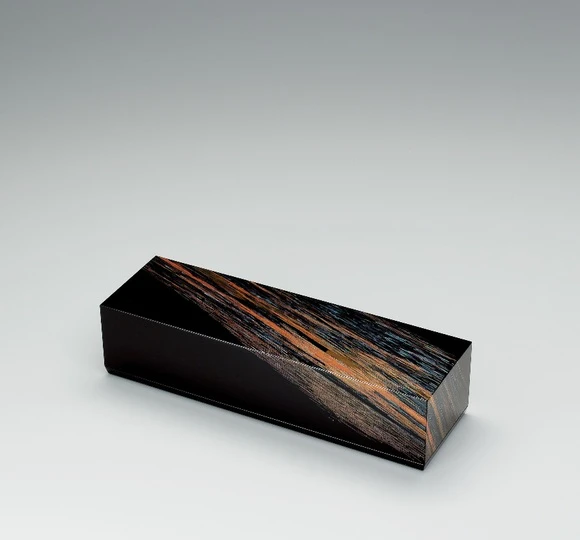
![The tea box with RADEN [Tide]](https://kougeifs.galleryjapan.com/files/galleryjapan/craft/4639/m_1x_95654_1e0535184dbbdf0cb393ad6eab4d7162.jpg.webp)
![The KANSHITSU bowl with MAKIE and RADEN [Moment]](https://kougeifs.galleryjapan.com/files/galleryjapan/craft/4639/m_1x_95653_917da27fa42df823d0da661e4494e94d.jpg.webp)
![The box with RADEN and MAKIE [Rape blossoms]](https://kougeifs.galleryjapan.com/files/galleryjapan/craft/4639/m_1x_95652_c5da882ec77dcbc90b040d6980dff16f.jpg.webp)
![The small box with RADEN and MAKIE [Gentian]](https://kougeifs.galleryjapan.com/files/galleryjapan/craft/4639/m_1x_95651_b41a934a2a58e6aa6452b6bd9c2991fe.jpg.webp)
![The box with RADEN and MAKIE [Sarcandra]](https://kougeifs.galleryjapan.com/files/galleryjapan/craft/4639/m_1x_95650_02d62a09cd258ba7728be4937310dc2e.jpg.webp)
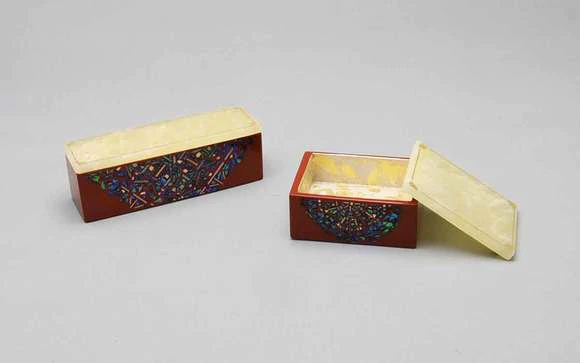
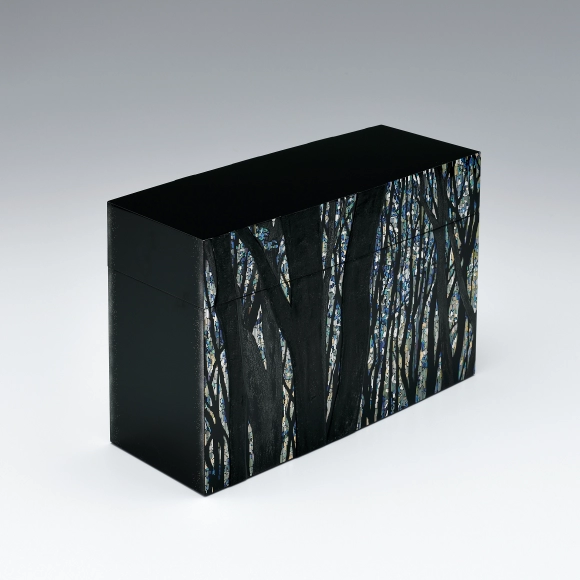
![The box with RADEN [Forest]](https://kougeifs.galleryjapan.com/files/galleryjapan/craft/4639/m_1x_95648_af28bc3a518cc6f5d424debd5f7a1c71.jpg.webp)
![The tray with RADEN and MAKIE [Mountains flower]](https://kougeifs.galleryjapan.com/files/galleryjapan/craft/4639/m_1x_95647_be7b8dbc41c6bd68284c86daf480d780.jpg.webp)
![The tray with RADEN and MAKIE [Lemmon]](https://kougeifs.galleryjapan.com/files/galleryjapan/craft/4639/m_1x_95646_5e7be7df6feb9055e9c04efdfb64d9c8.jpg.webp)
![The dish with RADEN and MAKIE [Olive]](https://kougeifs.galleryjapan.com/files/galleryjapan/craft/4639/m_1x_95645_b7d705f5626dc0b3e0642f4b9a830fbb.jpg.webp)
![The tray with RADEN [Sea]](https://kougeifs.galleryjapan.com/files/galleryjapan/craft/4639/m_1x_95643_47cd811dbade3a90d2f66c862363fad3.jpg.webp)
![The box with MAKIE and RADEN [Glaucidium palmate]](https://kougeifs.galleryjapan.com/files/galleryjapan/craft/4639/m_1x_194_20241003.jpg.webp)
![The box with RADEN and MAKIE [Autumn leaves]](https://kougeifs.galleryjapan.com/files/galleryjapan/craft/4639/m_1x_95637_ec6c3c619384415e614dc0475a46a0d8.jpg.webp)
![The box with RADEN [Rain]](https://kougeifs.galleryjapan.com/files/galleryjapan/craft/4639/m_1x_95636_de8420354fa1817272c40a5612d0ca71.jpg.webp)
![The box with RADEN [Wind]](https://kougeifs.galleryjapan.com/files/galleryjapan/craft/4639/m_1x_95635_88ad4dd4cd6c3774bf8763c371ba3b00.jpg.webp)
![The box with RADEN [Wind and wave]](https://kougeifs.galleryjapan.com/files/galleryjapan/craft/4639/m_1x_95634_abd6a072c28b3d7c0a3c036c9e6cab4e.jpg.webp)
![The box with RADEN [Chrysanthemum]](https://kougeifs.galleryjapan.com/files/galleryjapan/craft/4639/m_1x_95633_0738ab9b7b69a7169d9f76c405b33129.jpg.webp)
![The box with RADEN and MAKIE [Rain sound]](https://kougeifs.galleryjapan.com/files/galleryjapan/craft/4639/m_1x_95632_66211885f5a200625fe5244fa3e8181b.jpg.webp)
![The box with RADEN [Jasmine]](https://kougeifs.galleryjapan.com/files/galleryjapan/craft/4639/m_1x_95631_c687617a484243ea2ba455ee987994c2.jpg.webp)
![The small box with RADEN [Summer festival]](https://kougeifs.galleryjapan.com/files/galleryjapan/craft/4639/m_1x_95630_02d717bbc13ce1a02f860afb0ba086c3.jpg.webp)
![The box with RADEN [Hydrangea]](https://kougeifs.galleryjapan.com/files/galleryjapan/craft/4639/m_1x_95629_0a7e456422e89f8c47839a97b05b400e.jpg.webp)
![The box with RADEN [Summer orange]](https://kougeifs.galleryjapan.com/files/galleryjapan/craft/4639/m_1x_95628_8eea6ac616596db16e7261176226852c.jpg.webp)
![The box with RADEN [Rapids]](https://kougeifs.galleryjapan.com/files/galleryjapan/craft/4639/m_1x_95627_df7d6010c963543ceb5b5285e1d3255a.jpg.webp)
![The tea box [forget me not]](https://kougeifs.galleryjapan.com/files/galleryjapan/craft/4639/m_1x_95625_27b398e62ba46a08e4797353d2ec746d.jpg.webp)
![The box with RADEN [Cherry blossoms]](https://kougeifs.galleryjapan.com/files/galleryjapan/craft/4639/m_1x_95624_0816158fc2c753ace8fde3a6d6669bb4.jpg.webp)
![The box with RADEN [Sea]](https://kougeifs.galleryjapan.com/files/galleryjapan/craft/4639/m_1x_95623_467e1d01bd373bdd3c16bbd30226cd9f.jpg.webp)
![The box with RADEN and MAKIE [Last summer]](https://kougeifs.galleryjapan.com/files/galleryjapan/craft/4639/m_1x_95622_08452d115ac2115727a42b1ce971db58.jpg.webp)
![The marriage box [Balsam]](https://kougeifs.galleryjapan.com/files/galleryjapan/craft/4639/m_1x_95621_f7beb9fb0725d84c0944228e3365b4bf.jpg.webp)
![The box with RADEN and MAKIE [Summer solstice]](https://kougeifs.galleryjapan.com/files/galleryjapan/craft/4639/m_1x_95620_55e0e9a8ec108d105d26e494287d13c3.jpg.webp)