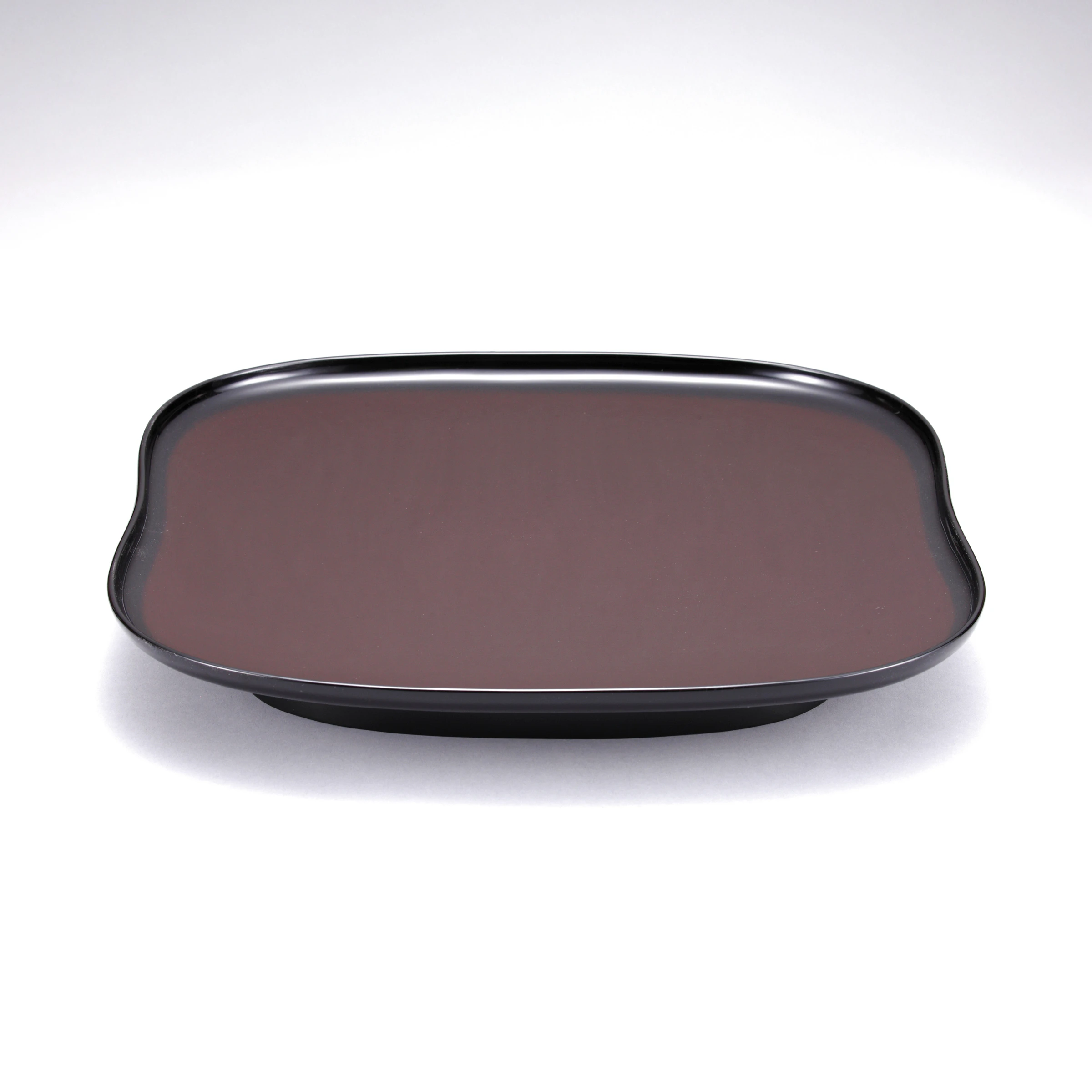
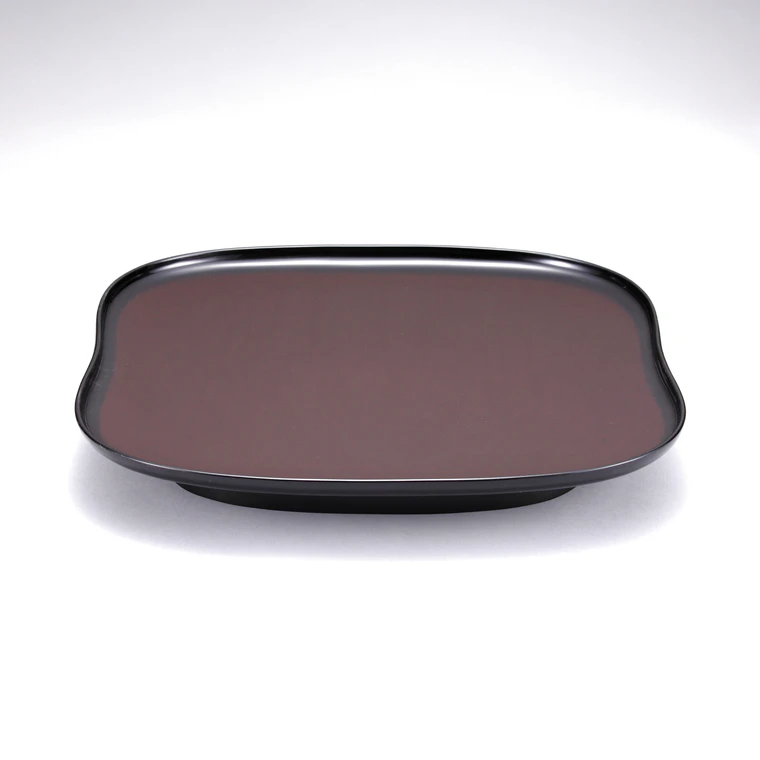
Lacquered Kanshitsu Tray
Year.2015- Lacquerware
- Awarded twice at the Japan Kōgei Assoc. Exhibition
- Price Range Please Inquire
Description
-
CategoryLacquerware
-
Year presented2015
-
RarityUnique
Techniques Used
Dry lacquer
For works of dry lacquer (kanshitsu), first a clay form is created and plaster is used to take a mold of the form. Next, repeated layers of hemp cloth and lacquer are applied to the mold until they are built up to the desired thickness. Finally, the mold is removed and additional coats of lacquer are applied to finish the piece. The hemp fibers are strengthened when the lacquer bonds with them, making dry lacquer an excellent technique for creating sturdy forms with a significant degree of freedom.
Lacquering
Lacquering (kyūshitsu) is the art of applying lacquer to a substrate using spatulas or brushes. The technique includes a range of processes, from reinforcing the substrate with cloth to building up the foundation and applying the middle- and top-coats. The final coat can be left as is (nuritate), polished with charcoal to a high-gloss finish (roiro shiage), or given one of several hundred alternative (kawarinuri) finishes. Lacquer application is known for both its technical difficulty and richly expressive qualities.
Selected exhibitions
- The 56th Ishikawa Traditional Kōgei Exhibition (2015)
- Selected