
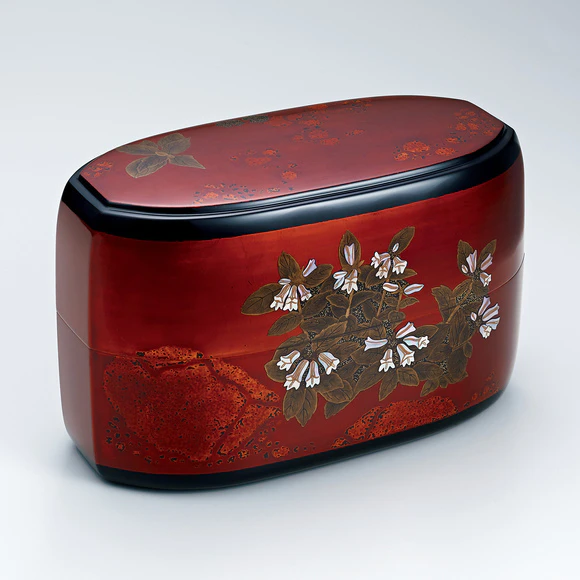
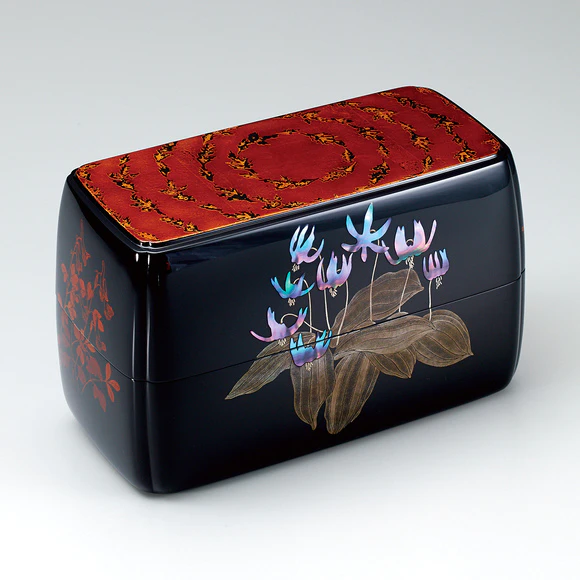
Box with Kawari-nuri and Design in Makie and Mother-of-pearl Inlay “Komakusa, Dicentra Peregrina”
H 14.0 x W 25.0 x D 14.0 cm,Year.2026Ko Kumagai
1971 -- Lacquerware
- Awarded once at the Japan Kōgei Assoc. Exhibition
- Price Range Please Inquire
The 73rd Japan Traditional Kōgei Exhibition
Period : Sep.2.2026 - Mar.7.2027
Description
-
CategoryLacquerware
-
Materials
-
DimensionsH 14.0 x W 25.0 x D 14.0 cm
-
Year presented2026
-
RarityUnique
Techniques Used
Maki-e
Maki-e (literally “sprinkled pictures”) is a representative lacquerware technique that originated in Japan around 1,200 years ago. Maki-e is done by painting lacquer motifs on the surface of a piece using a fine brush and then sprinkling gold powder onto the lacquer before it hardens, producing luxurious decorations.
Mother-of-pearl inlay (Raden)
Mother-of-pearl inlay (Raden) is a decorative technique that uses the iridescent inner layer of abalone shell, turban shell, pearl oyster shell, or other mollusk shells. The technique came to Japan from China 1,300 years ago, and pieces featuring mother-of-pearl inlay are included among the artifacts at the Shōsōin Repository in Nara.
Selected exhibitions
- The 73rd Japan Traditional Kōgei Exhibition (2026)
- Selected
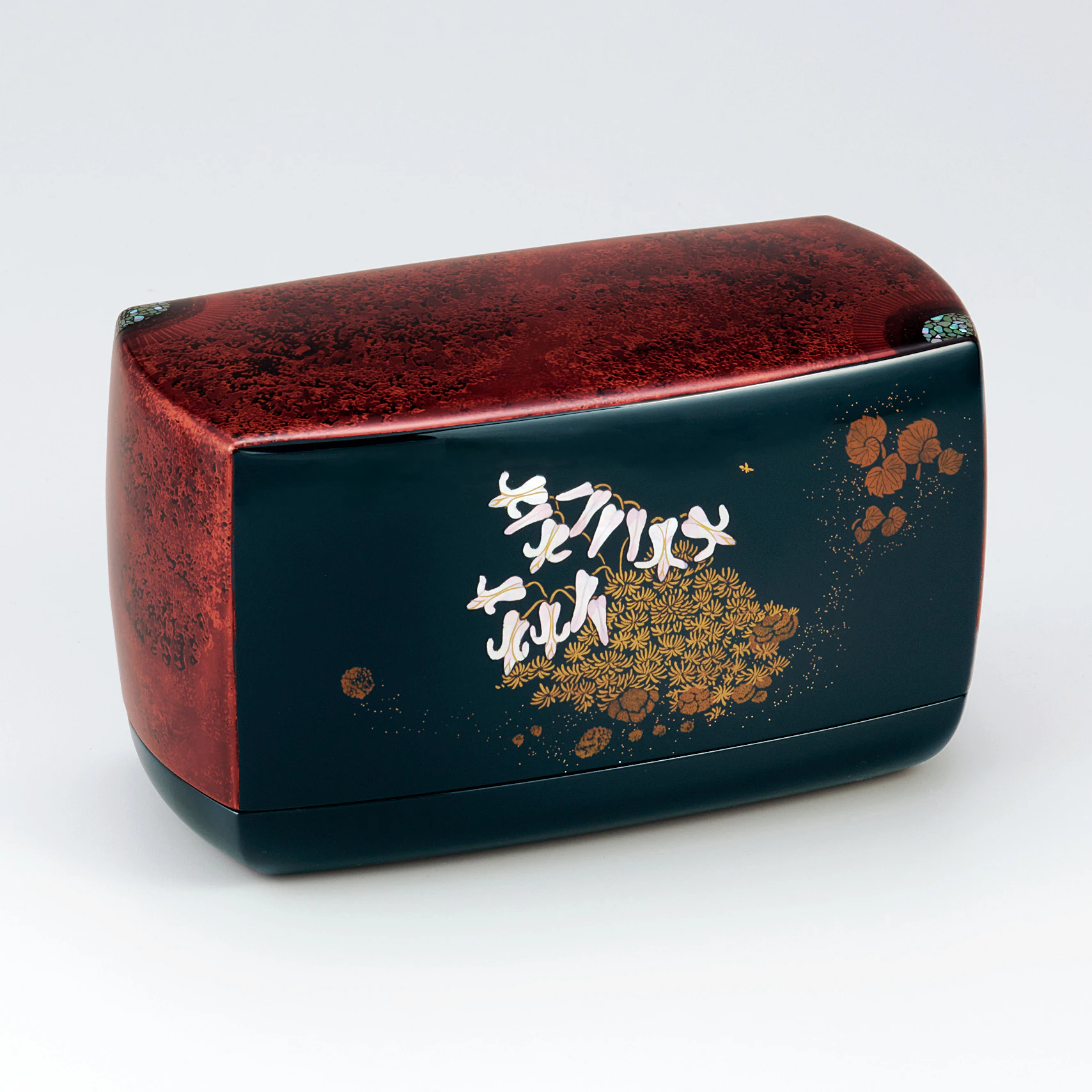
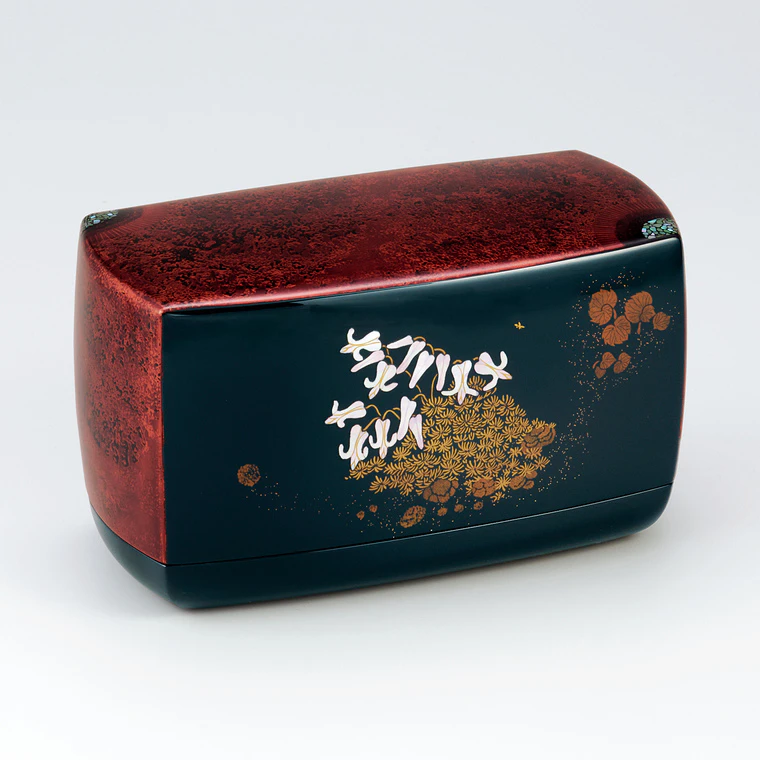
Box with Kawari-nuri and Design in Makie and Mother-of-pearl Inlay “Komakusa, Dicentra Peregrina”
Ko Kumagai
More Artworks by Ko Kumagai
next
prev